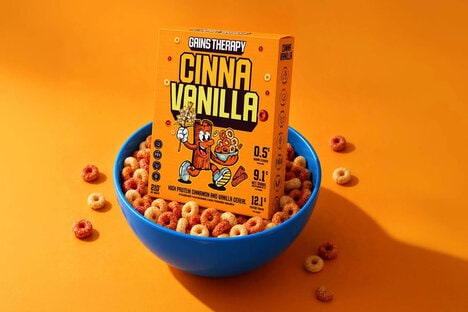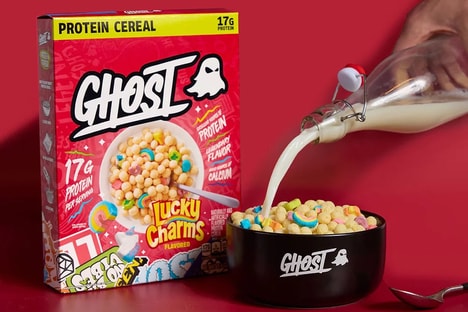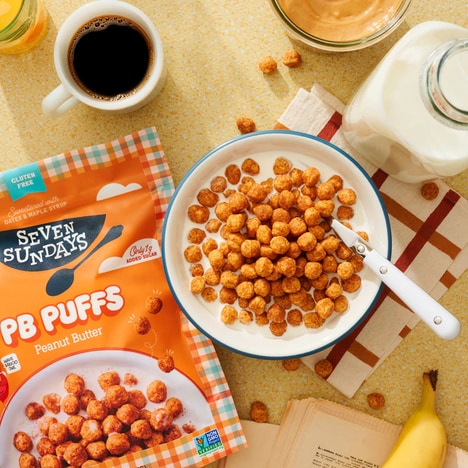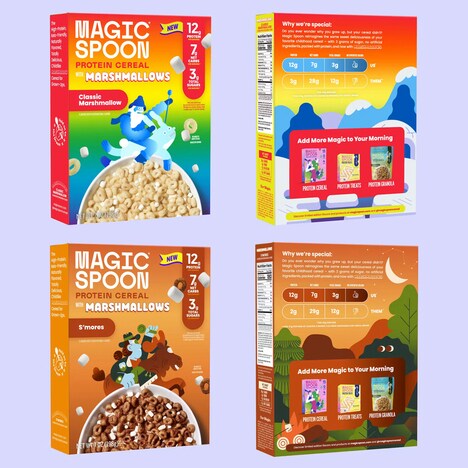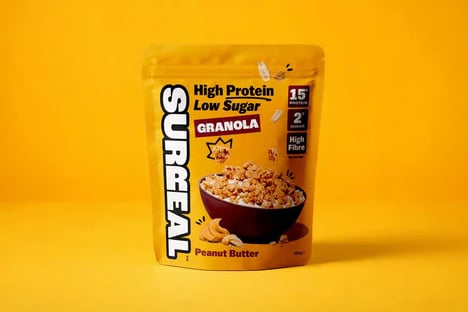
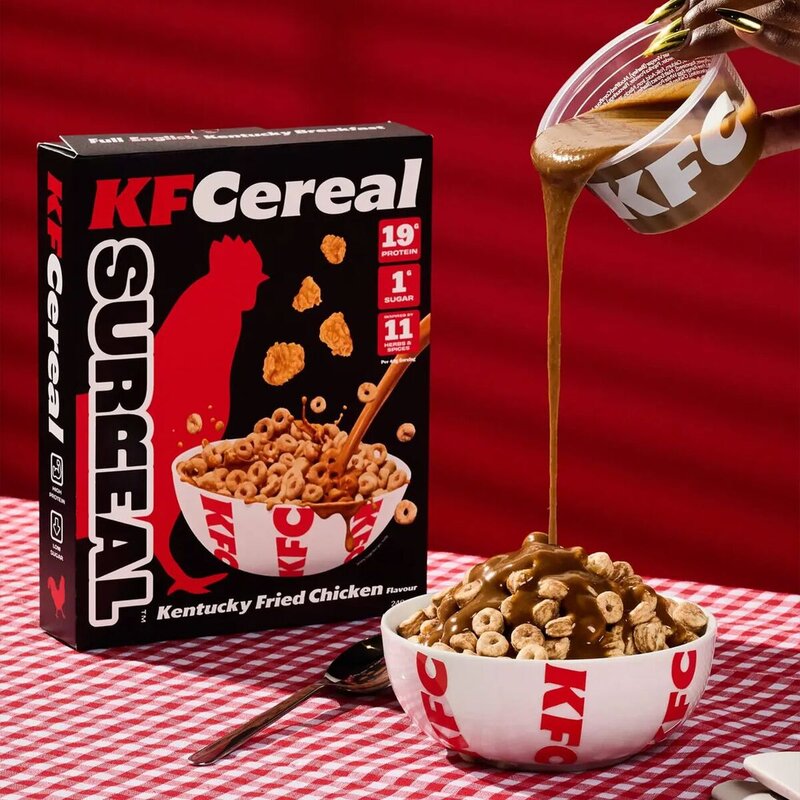
KFC and Surreal are introducing savory breakfast cereals with KFCereal, a limited-edition product inspired by the fast-food chain’s signature 11 herbs and spices. Rather than following the traditionally sweet cereal format, the collaboration recreates KFC’s savory flavor profile in crunchy cereal pieces. The brands take the concept further by recommending that consumers replace milk with KFC gravy, transforming the product into a breakfast-meets-fast-food mashup. KFCereal is available exclusively through Surreal’s online store while supplies last.
For KFC, the collaboration extends its recognizable flavors beyond restaurants and into a completely different eating occasion. Surreal benefits from the familiarity and cultural reach of the KFC brand while reinforcing its unconventional approach to cereal. The limited online release can generate curiosity and social sharing while allowing both companies to test consumer interest in unexpected savory cereal formats without committing to permanent retail distribution.
Image Credit: Surreal/KFC
What Makes This Trend Stand Out
- Savory Breakfast Formats
- Morning meals are expanding beyond sweet defaults as brands experiment with salty, umami, and comfort-food flavors that blur traditional category boundaries.
- Fast-food Grocery Crossovers
- Restaurant flavor equity is becoming a platform for packaged goods that let consumers experience familiar menu identities in new at-home occasions.
- Limited-edition Food Drops
- Scarcity-driven online releases create low-risk testing grounds for unconventional products while generating cultural conversation and collectible appeal.
Sectors Adopting This
- Breakfast Foods
- Cereal and morning snack brands have room to differentiate through savory formulations that challenge long-standing expectations around breakfast taste profiles.
- Quick-service Restaurants
- Fast-food chains can extend signature flavors into retail-inspired formats, turning brand recognition into new consumer touchpoints outside restaurants.
- E-commerce Grocery
- Direct-to-consumer food launches provide controlled environments for niche product experimentation, audience validation, and demand measurement before broader distribution.