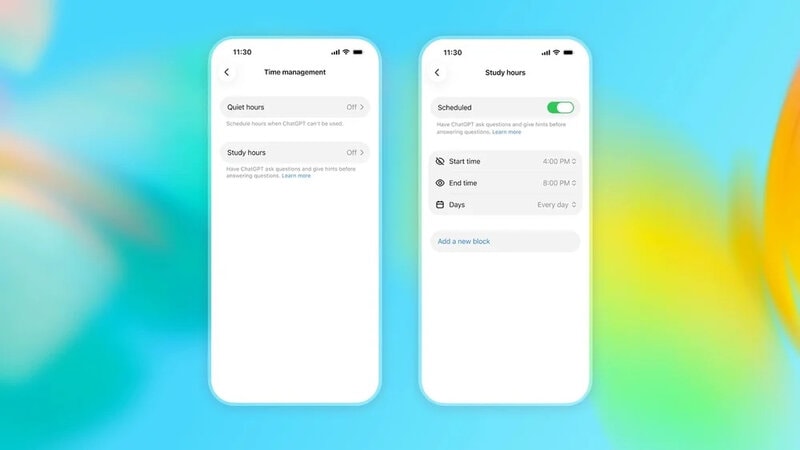
ChatGPT for Teens introduces an age-specific experience for users aged 13 to 17, adding learning tools and safety features within the existing chatbot rather than creating a separate service. Study Mode guides students through questions with step-by-step explanations instead of delivering direct answers, while quizzes, learning visualizations and Study Hours support structured study sessions. The experience activates automatically when a user identifies as a teenager or OpenAI's age-estimation systems determine an account is likely operated by someone under 18.
The teen experience applies stricter protections around self-harm, violence, eating disorders, dangerous activities and explicit content, alongside reminders to take breaks during extended use. Parents with linked accounts can manage features including Quiet Hours, Study Mode, Voice Mode, image generation and memory, while also choosing whether conversations contribute to model improvement. OpenAI says conversation history remains private even when certain serious safety alerts are shared with parents.
Image Credit: OpenAI
Key Themes Behind This Trend
- Age-adaptive AI
- Digital platforms are increasingly tailoring interfaces, content boundaries and feature access to inferred user age, creating opportunities for compliance-ready personalization systems in consumer AI.
- Guided Learning Chatbots
- Education-focused assistants are shifting from answer delivery to step-by-step reasoning, enabling new models for AI tutoring that support skill development and academic integrity.
- Guardian-controlled AI
- Parental dashboards for AI tools are emerging as trust layers that balance teen autonomy with supervision, opening space for family-centric safety and consent infrastructure.
Where This Applies
- Edtech
- AI-native study modes, quizzes and learning visualizations are reshaping digital education through adaptive tools that combine personalization with structured academic support.
- Online Safety
- Stronger content protections for minors highlight demand for real-time risk detection, escalation protocols and age-appropriate moderation across conversational platforms.
- Consumer AI
- Mainstream chatbot providers are embedding youth-specific safeguards within existing products, signaling growth potential for configurable AI experiences across household user segments.