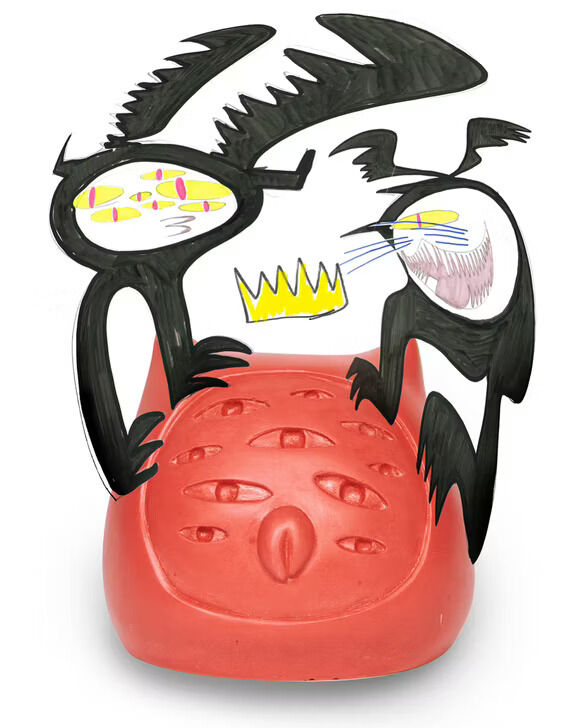
Charles Jeffrey Loverboy, a British fashion brand, has expanded into home goods through partnerships with Polish design group UAU Project and artist Nick Cowan. Two limited-edition sculptures intended to serve as bookends arrive as a part of the group’s debut home décor line, ‘Homeware Creatures.’ One of the offerings includes a red cat head made from red jesmonite and a sitting feline figurine made from blue jesmonite. The London-based designer has also collaborated with the Polish design company UAU Project on a line of unique 3D-printed vases created from bioplastics derived from plants.
The vases, which arrive in green/pink, red, yellow, and blue, can be used separately or layered one on top of the other to create a tower. Only on the company's official website are the Charles Jeffrey Loverboy ‘Homeware Creatures’ available.
Image Credit: Charles Jeffrey Loverboy
Key Themes Behind This Trend
- Collaborative Homeware
- More fashion brands are entering the home goods market through collaborations, presenting opportunities for disruptive innovation in sustainable and 3D-printed home décor.
- Sculptural Home Goods
- The trend towards sculptural bookends and vases presents a disruptive innovation opportunity in unique and artistic home décor offerings.
- Bioplastic Home Decor
- An emerging trend in sustainable materials, bioplastics derived from plants in home décor presents an opportunity for disruptive innovation in eco-friendly design.
Where This Applies
- Fashion Industry
- The fashion industry is expanding into home goods, offering collaborations with artists and designers to create unique, artistic, and limited edition collections for the home décor market.
- Design Industry
- Design companies and artists are partnering with fashion brands to create innovative home goods that blur the line between sculpture and functional décor.
- Sustainable Materials Industry
- The demand for eco-friendly home décor and bioplastics derived from plants is an emerging trend with disruptive innovation opportunities in the sustainable materials industry.