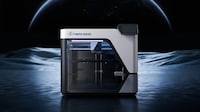
California-based 3D printer manufacturer Raise3D has well and truly lived up to its name by raising the stakes with the release of a brand new desktop 3D printer that is capable of producing carbon fiber-strengthened components.
Dubbed the 'E2CF,' this desktop 3D printer is designed to be able to create extremely durable parts thanks to the inclusion of a double-gear extrusion mechanism, strengthened nozzle and auto-bed levelling for better adhesive performance.
With the release of the 'E2CF,' Raise3D is clearly making a strong play towards filling the demand for a desktop 3D printer that is capable of handling carbon fiber-fortified components, effectively making carbon fiber printing more streamlined and accessible to a wider swathe of users, particularly those who aren't engaged in high-volume and industrial rates of production.
Image Credit: Raise3D
What's Driving This Trend
- Desktop Carbon Fiber 3D Printing
- Raise3D's E2CF printer offers consumers greater accessibility to strong and durable carbon fiber components.
- Double-gear Extrusion Mechanism
- Raise3D's development of a double-gear extrusion mechanism for strengthening 3D prints has the potential to enhance overall 3D printing durability.
- Auto-bed Leveling
- The implementation of auto-bed leveling in the E2CF 3D printer highlights the potential for greater efficiency and accuracy in 3D printing processes.
Who This Affects Most
- 3D Printing Manufacturing
- The development of carbon fiber-ready printers signals a new era of 3D printing manufacturing, particularly for durable goods.
- Automotive Manufacturing
- 3D printing technological advancements such as double-gear extrusion mechanisms have the potential to revolutionize the automotive manufacturing industry.
- Aerospace Manufacturing
- The carbon fiber 3D printing trend presents numerous disruptive innovation opportunities for the aerospace manufacturing industry.