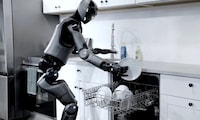
When you hear the name 'Boris' you're probably thinking of a Russian politician or a legendary German tennis player, and not a robot -- but that stands to change with the advent of Boris 2 the dishwashing robot.
Boris 2 was developed by a team of researchers, including Professor Jeremy Wyatt, at the University of Birmingham's School of Computing Science. While a dishwashing robot may not appear to be the most needed thing in the world right now, that's missing the point -- this robot demonstrates a difficult and impressive range of physical manipulation skills that could be applicable to other endeavors.
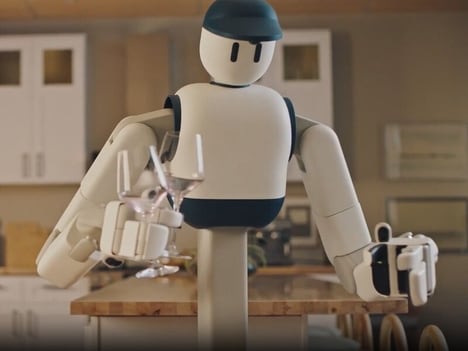
Boris 2 is able to learn different ways of grasping objects, as well as figuring out different ways to handle different objects. It can either curl its fingers around objects or obtain a pinch-grip.
What Makes This Trend Stand Out
- Robot Manipulation Skills
- The development of Boris 2 showcases advanced physical manipulation skills that can be applied to a range of industries.
- Robotic Dishwashing
- Boris 2's dishwashing abilities highlight the potential for disrupting the traditional human-operated dishwashing industry.
- Machine Learning in Robotics
- Boris 2's ability to learn different ways of grasping objects demonstrates the potential for machine learning applications in robotics.
Sectors Adopting This
- Robotic Manufacturing
- The advanced physical manipulation skills of Boris 2 open opportunities for disrupting and enhancing automation in manufacturing processes.
- Hospitality Industry
- The robotic dishwashing capabilities of Boris 2 have the potential to revolutionize the efficiency and precision of dishwashing tasks in hotels, restaurants, and other hospitality establishments.
- Education and Research
- Boris 2's machine learning abilities offer opportunities for advancing research and education in robotics, artificial intelligence, and automation.