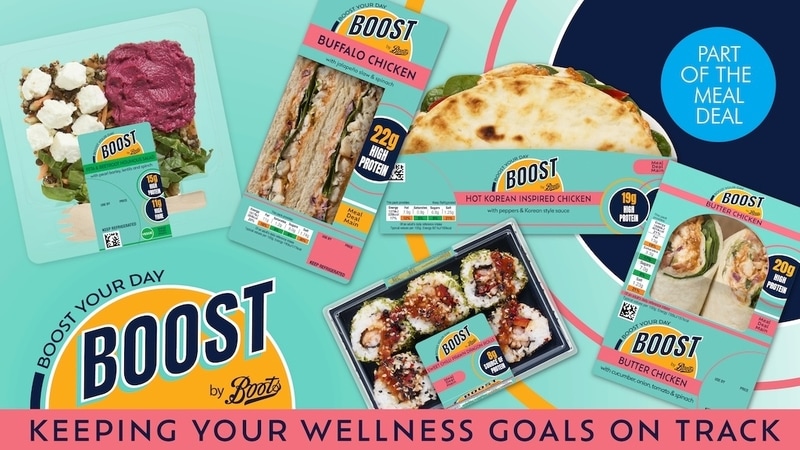
Boost by Boots is a healthy new meal deal range catering to GLP-1 users with high-protein, lower calorie options. Expertly crafted with the support of an in-house nutrition team, the range includes 15 products like the Onion Bhaji & Pickled Beetroot Sandwich; Rainbow Salad; and Teriyaki & Sweet Chilli Chicken Sushi, with key callouts like fiber, sugar, fat, and salt.
Boots Online Doctor research found that 7 in 10 GLP-1 users are buying food on the go at least twice a week and high-protein and lower calorie options are key considerations. The data from over 1,000 respondents also said that 73% wished it were easier to understand what's healthy and what isn’t, and 83% said they’d be more likely to buy on-the-go food if it were clearly designed to keep them feeling fuller for longer.
Key Themes Behind This Trend
- Glp-1 Diet-friendly Convenience
- A growing cohort of GLP-1 users is driving demand for ready meals formulated to align with medication-driven appetite and weight changes, enabling products that bridge clinical guidance and everyday convenience.
- High-protein Low-calorie On-the-go
- Busy consumers prioritizing satiety are creating a market for compact, protein-forward meals that deliver lower calories without sacrificing flavor or portability.
- Transparent Nutritional Labelling
- Heightened consumer desire for clarity around fiber, sugar, fat, and salt is paving the way for front-of-pack designs and ingredient disclosures that directly influence purchase decisions.
Where This Applies
- Retail Pharmacy
- Pharmacy chains are positioned to integrate clinically-endorsed meal offerings and nutrition guidance into their product mix, transforming them into lifestyle health destinations for medication users.
- Food Service and Catering
- On-the-go food providers and corporate caterers face opportunities to supply high-protein, lower-calorie menu lines tailored to clients using appetite-modulating therapies, reshaping contracted meal programs.
- Nutrition Technology
- Digital platforms that personalize meal recommendations and visualize satiety metrics could become essential tools for consumers and clinicians managing diet alongside GLP-1 treatments.