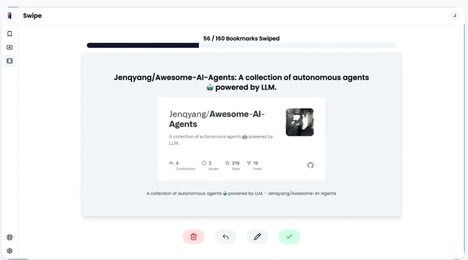
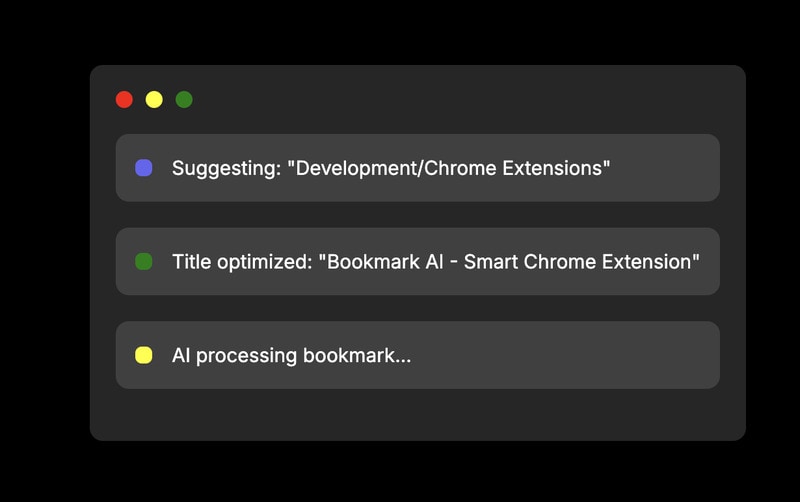
Bookmark AI offers an automated approach to organizing saved online content, addressing a common challenge for users who manage large volumes of links across work and personal contexts. By using machine learning to classify bookmarks, the tool suggests appropriate folders and creates new categories when needed.
From a business productivity standpoint, this automation can reduce time spent on manual organization and improve information retrieval, especially for users who rely on extensive research or track multiple projects simultaneously. The solution reflects a broader shift toward AI-driven knowledge management tools that help individuals maintain structured digital workflows. While the platform focuses on a simple function, its value lies in enhancing efficiency and reducing cognitive load associated with content sorting — an increasingly relevant need as digital information consumption grows.
Image Credit: Bookmark AI
Key Themes Behind This Trend
- AI-driven Knowledge Management
- The integration of AI in knowledge management is reshaping how individuals organize and access digital information effectively.
- Automated Digital Workflow Enhancement
- Automation in digital workflows offers opportunities to streamline processes, minimizing manual tasks and improving productivity.
- Personalized Content Organization
- Personalization in content organization addresses user-specific needs, enhancing the relevance and efficiency of digital tool solutions.
Where This Applies
- Business Productivity Software
- Business productivity software stands to benefit from innovations that reduce cognitive load and streamline information organization.
- Machine Learning Applications
- Advancements in machine learning present potential to revolutionize data sorting and classification across various sectors.
- Digital Information Management
- Digital information management products are evolving to support users in maintaining structured and accessible libraries of content.