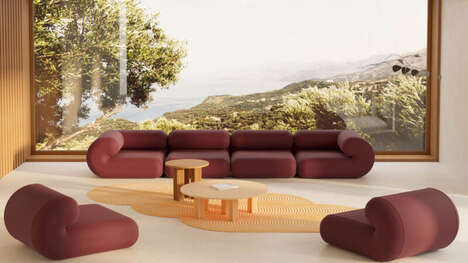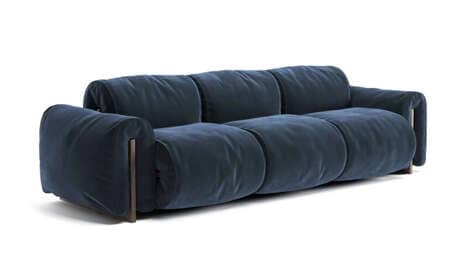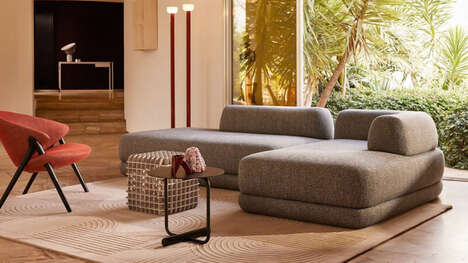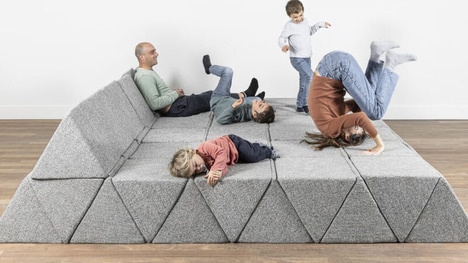
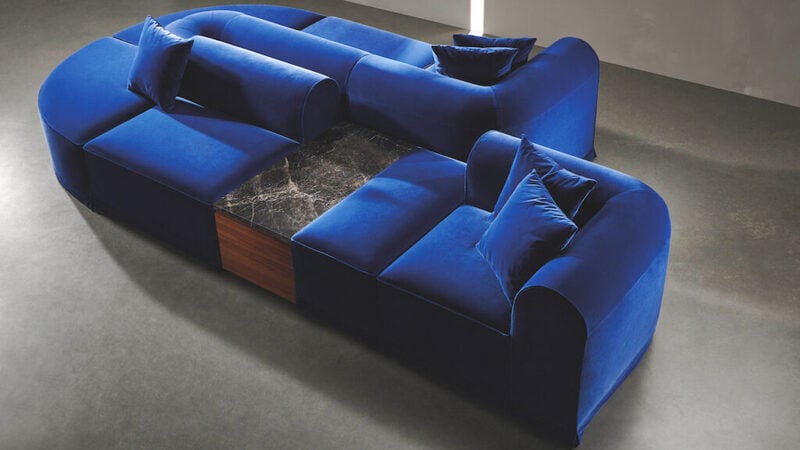
The Wittmann Möbelwerkstätten 'BLOCKS' Modular Sofa has been designed by Shanghai-based Neri&Hu as an adaptable piece of furniture for the modern home or office. The sofa is inspired by the recognizable Club 1910 armchair by Austrian architect Joseph Hoffman and features a decidedly curvaceous construction for onlookers to admire. The furniture piece preserves the heritage of the design, but incorporates six cushions with a table which can all be grouped together or positioned independently to suit different needs or preferences.
The Wittmann Möbelwerkstätten 'BLOCKS' Modular Sofa can be oriented into a wide range of positions, which will work well for spaces where agility and flexibility are of the utmost importance. The sofa is observed in a rich royal blue velvet finish, while the body is made with elm veneer or walnut veneer and the table has a Nero Marquina marble topper.
Image Credit: Wittmann
What Makes This Trend Stand Out
- Modular Furniture
- There is room for a disruptive innovation in the furniture industry for customizable and adaptable furniture pieces.
- Curvaceous Design
- An opportunity exists for households where people are looking for affable, curvaceous, and intricate designs for their decorative furniture.
- Flexible Workspaces
- There is potential for innovation in creating adaptable and configurable furniture pieces that can be used in versatile spaces, like offices and co-working spaces.
Sectors Adopting This
- Furniture
- The furniture industry should explore modular and adaptable pieces that can fit into diverse spaces, preserving the heritage of the design.
- Interior Design
- The interior design industry can tap into a latent demand for decorative pieces of furniture that have unique designs and customizable features.
- Office Spaces
- There is potential for the innovation of furniture pieces that can be reconfigured to create workspaces that can easily adapt to changing needs and preferences.