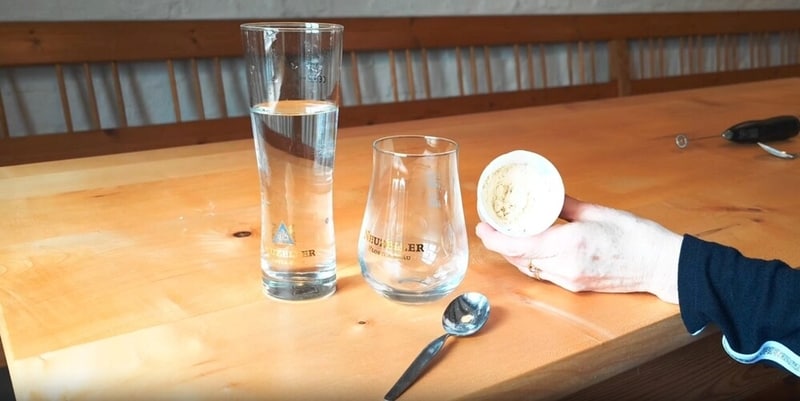
Klosterbrauerei Neuzelle introduced a powdered beer product developed with technology partners and BMWi funding, offering a dextrin-rich, water-soluble granulate that reconstitutes into a foamy, zero-alcohol beer when mixed with water. The brewery brewed a conventional beer base, then processed it into a soluble powder for testing in limited markets through mid-2023, with plans to expand into alcoholic varieties.
The powder was designed to cut transport weight to roughly 10% of bottled beer and to simplify logistics for distant markets. Neuzelle aims to sell the granules to global resellers rather than core domestic craft drinkers, positioning the format for regions with high shipping costs. For consumers, powdered beer promises easier shipping, lower emissions and novel on-demand serving; its rollout tests whether taste and ritual can adapt to a dehydrated format.
Image Credit: Klosterbrauerei Neuzelle
What's Driving This Trend
- Dehydrated Alcoholic Beverages
- A shift toward water-soluble beer granules that preserve flavor profiles while enabling transport as low-mass powders opens possibilities for reformulating alcohol delivery and storage.
- Lightweight Supply-chain Packaging
- Reducing transport weight to roughly ten percent of bottled equivalents signals redesign opportunities across logistics, carbon-footprint accounting and last-mile economics.
- On-demand Reconstitution Rituals
- Consumers encountering foamy, instant-served drinks create space for new consumption rituals and service formats that replace traditional pouring and glassware expectations.
Who This Affects Most
- Global Beverage Distribution
- Cross-border resellers and importers could see fundamentally lower freight costs and inventory models when beverages travel as compact powders instead of bulk liquids.
- Travel and Hospitality
- Airlines, cruise lines and remote lodgings facing strict weight and storage constraints may gain alternative beverage offerings that reduce waste and storage footprint.
- Consumer Packaged Goods
- Manufacturers and retail brands could reengineer packaging, shelf layouts and unit economics around powdered formulations that extend shelf life and compress retail space needs.