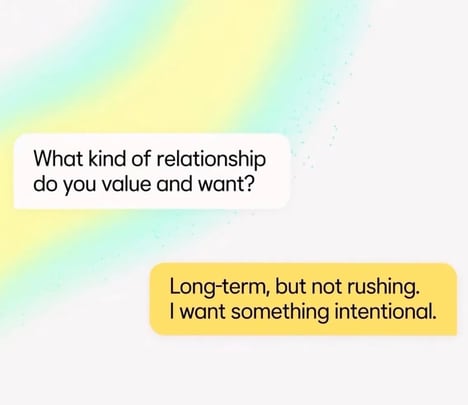
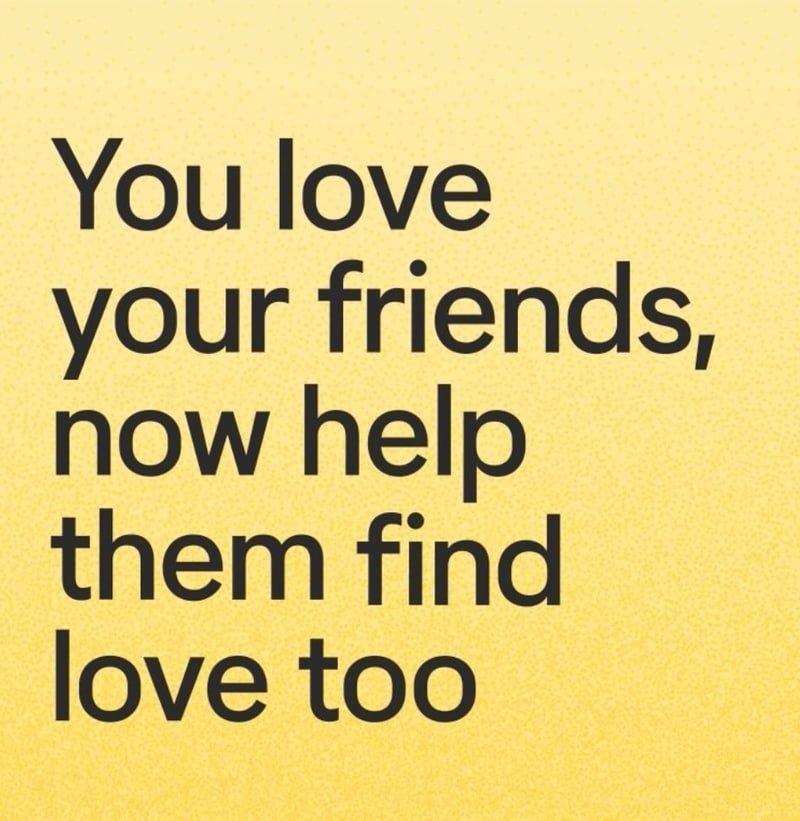
One of the longest-standing frustrations among dating app users is the lack of a way for people they know to vouch for them, and with burned-out daters craving authentic credibility, Bumble introduced a feature called BeePitched. This new feature, available to members in the USA and UK, makes it possible for friends and family members to play matchmaker.
As singles experience dating app fatigue and grow skeptical of algorithms that feel less like genuine matchmaking and more like engagement traps, they're turning back to something far more trusted—the people who actually know them, and want to see them happy. No Bumble account is needed to create a pitch, and with BeePitched, co-pitchers can pick a pitch style, share a few photos, and describe what makes the dating app user great. Notably, nothing goes public without the person being pitched’s approval, and once they view the pitch, they can edit or reject details.
Key Themes Behind This Trend
- Friend-led Matchmaking
- Trusted personal endorsements are reshaping digital dating by adding human credibility to profiles that previously relied on photos, prompts, and algorithmic ranking.
- Consent-based Profile Building
- User-approved third-party contributions create room for more nuanced identity presentation while preserving control over what becomes visible in a dating environment.
- Dating App Fatigue Relief
- Burned-out singles are gravitating toward features that feel more personal and accountable, opening space for platforms that blend social proof with digital convenience.
Where This Applies
- Online Dating
- Dating platforms can differentiate through socially validated discovery tools that reduce skepticism around automated matching and increase perceived authenticity.
- Social Networking
- Existing friend and family networks gain new relevance as trust infrastructure for introductions, recommendations, and relationship-oriented digital experiences.
- Reputation Technology
- Personal credibility systems are expanding beyond reviews and ratings into intimate consumer contexts where endorsement quality and consent become central design factors.