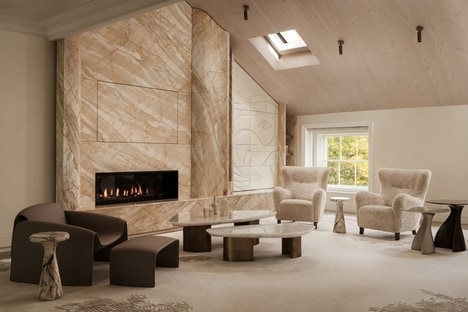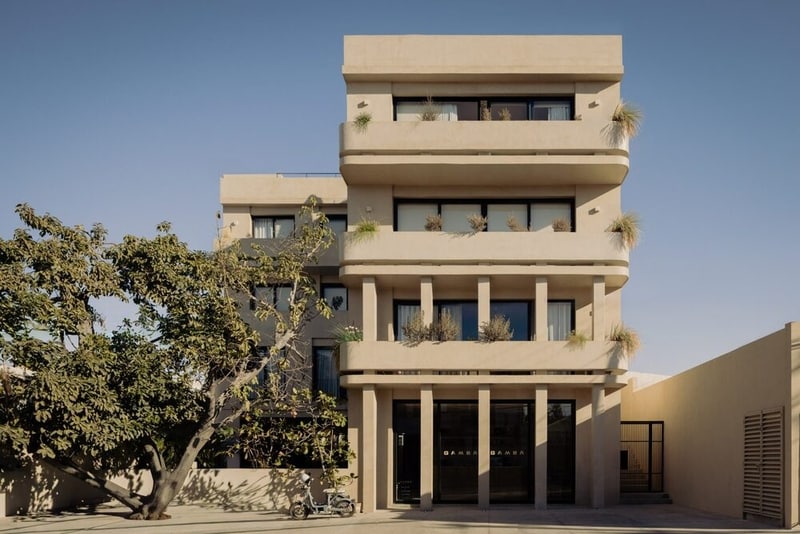
Barde vanVoltt designed the Estero Residences development and the adjoining Gamba café in San José del Cabo, Mexico, combining warm-toned materials with coastal landscaping and open-air circulation. The project uses textured plaster walls, terracotta surfaces, natural stone, timber detailing, and integrated greenery across the residential and hospitality spaces. Outdoor terraces, shaded walkways, and planted courtyards connect the buildings to the surrounding desert climate while maintaining visual continuity between interior and exterior areas.
The foundation of the interiors incorporates built-in seating, sculptural lighting, custom wood furniture, and curved architectural forms arranged around shared social spaces. Gamba café extends the material palette through soft earth tones, layered textiles, and open kitchen visibility integrated into the compact dining layout.
Image Credit: Zaickz Moz
Why This Trend Is Growing
- Desert-coastal Material Fusion
- A blend of terracotta, textured plaster, timber, and native planting creates new material systems that respond to both arid climates and coastal aesthetics, enabling novel construction assemblies and finish families.
- Indoor-outdoor Social Integration
- Open-air circulation, planted courtyards, and shaded terraces redefine communal living by blurring interior-exterior boundaries and prompting rethinking of spatial programming and comfort technologies.
- Curved Form Customization
- Use of sculptural lighting, built-in seating, and sweeping curved architecture signals opportunities for modular curved components and bespoke mass-manufactured elements that personalize communal spaces.
Industries Being Reshaped
- Residential Development
- Integration of climate-responsive landscaping and material palettes suggests alternative development typologies that prioritize passive comfort and experiential continuity between private and shared areas.
- Hospitality and Café Design
- Compact dining layouts with visible open kitchens and layered textiles point toward new small-footprint hospitality formats that emphasize material storytelling and tactile guest experiences.
- Sustainable Building Materials
- Prominent use of natural stone, terracotta, and textured plasters indicates a market for low-embodied-energy finishes and composite systems tailored for harsh, sun-exposed environments.