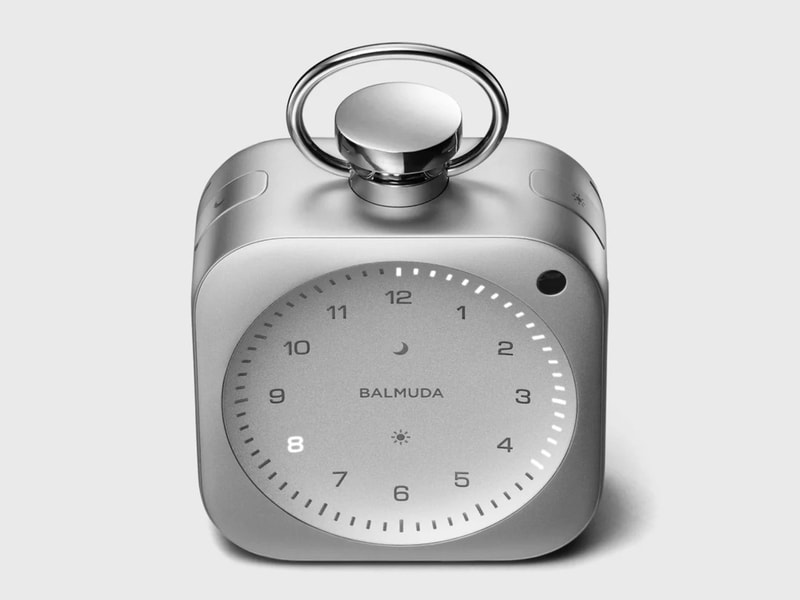
Balmuda's The Clock is a tabletop timepiece developed by the Tokyo-based manufacturer. The design replaces conventional hands with a light-based display, using illuminated arcs that move across a circular face to indicate the time. The arcs shift continuously to represent hours and minutes, removing the need for mechanical pointers or visible markers on the dial.
The clock emits a chime at each hour, paired with a light animation that moves across the surface. The construction removes elements such as a traditional cover glass and exposed hands, focusing instead on a simplified form defined by light and motion. The housing is compact and designed for tabletop placement, with integrated controls that allow adjustment of brightness and sound settings. The system presents time through a continuous illuminated display rather than physical movement. It is now available for pre-order in the US for the price of $499.
Image Credit: BALMUDA
What's Driving This Trend
- Light-based Time Displays
- Continuous illuminated arcs replacing physical hands introduce opportunities for products that communicate temporal information through programmable light patterns and motion without mechanical components.
- Minimalist Interface Design
- Reduction of visible hardware and reliance on pure light and motion creates scope for devices that prioritize form and ambient expression over traditional indicators and knobs.
- Synchronized Audio-visual Alerts
- Hourly chimes paired with coordinated light animations point to new experiences where subtle multi-sensory cues convey information and mood in shared environments.
Who This Affects Most
- Consumer Electronics
- A move toward light-driven displays suggests potential for compact, low-maintenance timepieces and household gadgets that emphasize aesthetics and longevity over mechanical complexity.
- Interior Design and Home Decor
- Objects that present time as ambient illumination open possibilities for decor elements that double as functional art and adapt to lighting schemes and room atmospheres.
- Healthcare Monitoring Devices
- Non-intrusive visual cues based on soft light and motion lend themselves to patient-facing devices that indicate schedules, reminders, or status changes without disruptive alarms.