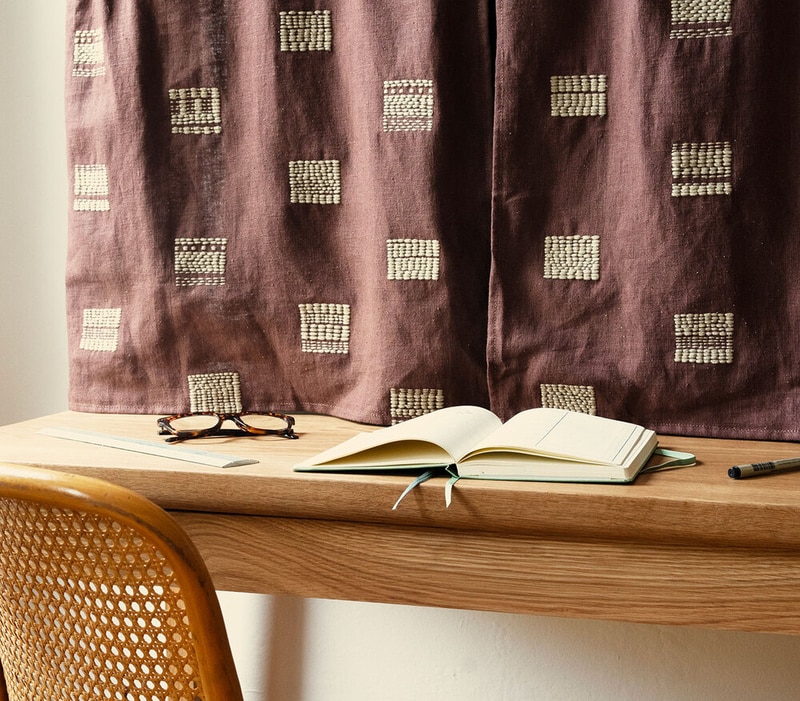
The Riffmade collection is a series of furniture and home objects developed by Brooklyn-based designers Stephanie Betesh and Nicholas Steigmann. The pieces are produced in the United States and include items such as the Veil Desk, Hearth Island, and Nook Table. Each design incorporates wood construction paired with integrated textile elements, allowing surfaces to be concealed or revealed through curtain panels.
The Veil Desk uses a curtain to enclose the workspace, creating a defined boundary within a room. The Hearth Island features a butcher block surface with open shelving and optional storage components, while the Nook Table includes cable management and compact storage within its structure. A patented curtain system removes the need for traditional hardware, allowing textiles to be attached, removed, and replaced without brackets or fixed fittings. Smaller objects, such as wall hooks and burners, extend the same material and construction approach across the collection.
Image Credit: Riffmade
What Makes This Trend Stand Out
- Textile-integrated Modular Furniture
- The integration of removable textiles with wooden modules enables configurable privacy and aesthetic changeability in multiuse living spaces, challenging fixed cabinetry norms.
- Tool-free Attachment Systems
- Patented bracketless curtain fittings allow rapid reconfiguration and aftermarket customization of furniture without hardware expertise, creating opportunities for plug-and-play component ecosystems.
- Multi-functional Micro-units
- Compact furniture combining storage, cable management, and surface functions supports denser urban living by replacing multiple objects with single adaptable units.
Sectors Adopting This
- Residential Furniture Manufacturing
- Mass-market furniture makers could shift from fixed products to modular, textile-augmented offerings that extend lifecycle and personalization through replaceable panels.
- Co-living and Flexible Real Estate
- Shared-housing operators may leverage curtain-equipped furnishings to create temporary private zones and customizable unit layouts for variable tenancy models.
- Home Textile and Soft-goods Retail
- Textile suppliers and retailers stand to expand into subscription models for interchangeable panels and limited-edition collaborations tied to modular furniture platforms.