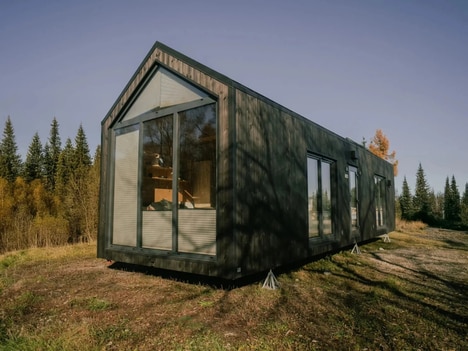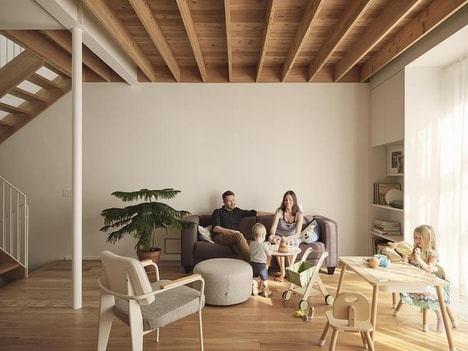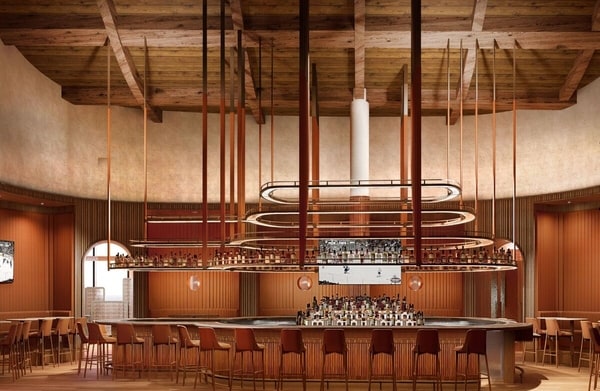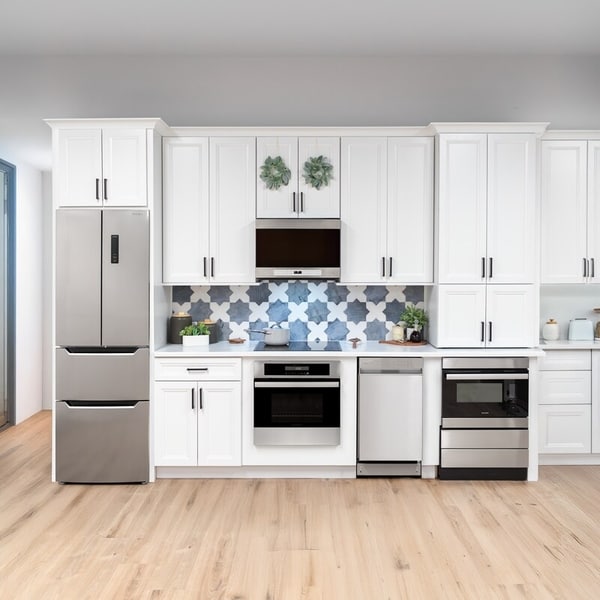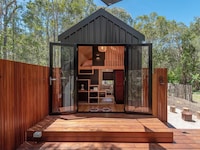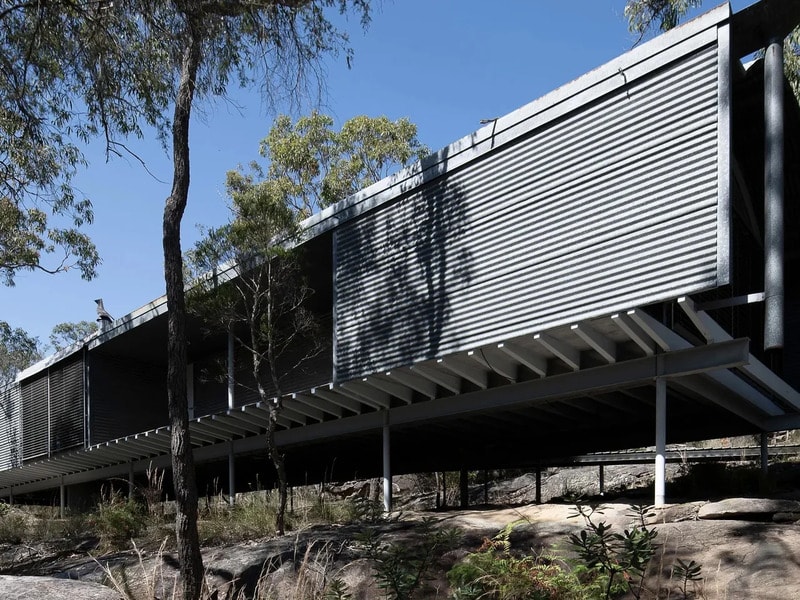
The Ball-Eastaway House is a landmark Australian residence by Pettit and Sevitt that has been listed for sale for the first time in over 40 years. The property is set on a sloping New South Wales site framed by native bushland and distant ridgelines, and its modernist design emphasizes a strong connection to the surrounding landscape. The structure is elevated above the ground with deep overhangs, timber cladding, and extensive glazing that opens living spaces to outdoor decks and verandas. The pitched rooflines and modular planning reflect the architects’ climate-responsive approach and integration of indoor and outdoor environments.
The interior includes open-plan living areas characterized by exposed timber beams and uninterrupted sightlines toward native vegetation. Decks extend from main rooms and hover above the terrain, reinforcing the house’s engagement with the bush setting. Original finishes and built-in elements remain intact, preserving the architectural character established during its initial construction.
Image Credit: Glen Murcutt
Key Themes Behind This Trend
- Cantilevered Elevated Design
- Elevated, cantilevered living platforms that minimize ground disturbance enable new approaches to site-sensitive construction and adaptable foundation systems.
- Bushland-integrated Architecture
- Seamless indoor-outdoor glazing and deck systems tailored to native vegetation create models for climate-responsive, biophilic residential design.
- Midcentury Modern Preservation Demand
- Growing market interest in intact midcentury modern homes supports scalable restoration workflows and conservation-focused retrofitting services.
Where This Applies
- Residential Real Estate
- Niche listings for architecturally significant homes can shift valuation models and brokerage services toward provenance and design pedigree.
- Sustainable Construction Materials
- Demand for durable timber cladding and long-span structural components highlights opportunities for engineered, low-embodied-carbon building systems.
- Architectural Heritage Tourism
- Curated access to landmark residences adjacent to native bushland positions experiential tourism packages centered on design and landscape authenticity.