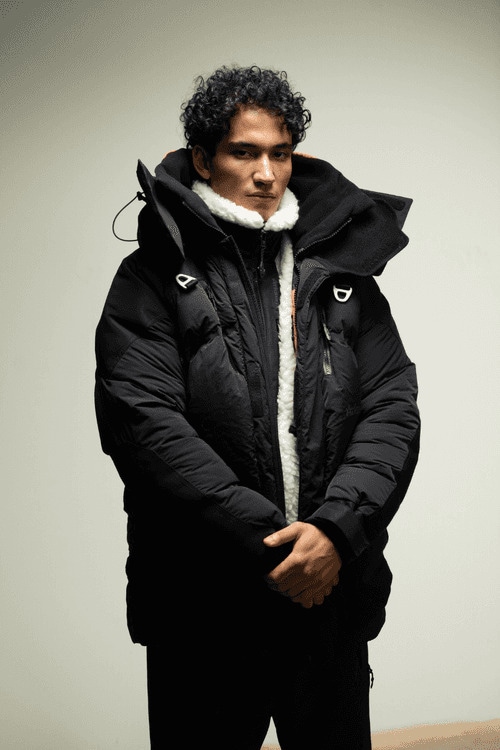
Arksen Asgard Down Parka delivers arctic-grade warmth and resilience through a technical construction built to withstand temperatures down to –40 °C. The jacket uses a 100 % recycled nylon outer shell treated for down proofing and insulated with 850-fill-power goose down for a high warmth-to-weight ratio. Reinforced shoulders, elbows and pockets add abrasion resistance, and a contoured collar plus detachable hood create a snug cocoon against wind and cold.
The parka’s functional design extends beyond insulation. It features ten external and internal pockets for structured storage, a concealed waist adjuster for a tailored fit, and a two-way YKK AquaGuard zipper that allows bottom ventilation without fully opening the jacket. Stretch soft-shell cuffs with integrated thumbholes seal out drafts while non-stitched baffling reduces potential heat loss.
Image Credit: Arksen
What Makes This Trend Stand Out
- Sustainable Outerwear
- The trend towards using 100% recycled materials in extreme-cold parkas demonstrates a shift towards environmentally-friendly fashion that does not sacrifice performance.
- Multi-functional Apparel
- The incorporation of abundant pockets and adjustable elements in jackets reflects a growing demand for clothing that combines versatility with utility.
- Advanced Cold-weather Technology
- Innovations in materials and design, such as non-stitched baffling and two-way zippers, highlight advancements in optimizing warmth and functionality for frigid environments.
Sectors Adopting This
- Outdoor Apparel
- The outdoor apparel industry is increasingly focusing on high-performance, environmentally conscious products to meet consumer demand for sustainable and durable gear.
- Recycled Materials Industry
- A rise in demand for recycled fibers like nylon emphasizes the recycled materials industry's role in supporting eco-friendly initiatives across diverse manufacturing sectors.
- Technical Fabrics
- The development of advanced materials for extreme weather conditions opens up opportunities within the technical fabrics industry for innovation in heat retention and moisture control.