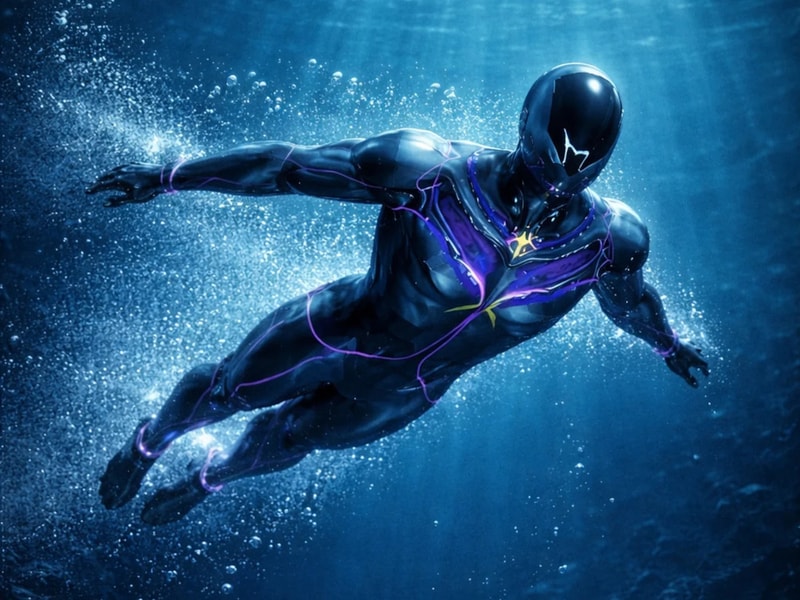
AQUA HUMAN dive suit by Ivana Nedeljkovska is a conceptual underwater system designed to replace traditional scuba configurations with a fully integrated structure. The design eliminates external oxygen tanks, embedding breathing, temperature control, and mobility directly into the suit’s layered construction. Instead of attaching equipment onto the body, the system functions as a single unit that aligns with natural movement and reduces physical resistance in water. The form is developed through studies of human respiration and pressure response rather than conventional gear layouts.
The suit incorporates built-in motors to assist movement and reduce drag, supporting smoother navigation through water. An integrated AI system monitors the diver’s condition and surrounding environment in real time, creating a continuous feedback loop for safety. Light strips embedded across the surface act as visual indicators, signalling status and potential hazards to nearby divers.
Image Credit: Ivana Nedeljkovska
What Makes This Trend Stand Out
- Integrated Wearable Life Support
- A shift from external tanks to suit-embedded breathing and thermal systems creates potential for compact, self-contained personal life-support platforms that redefine human survival in extreme environments.
- Bio-responsive Suit Architecture
- Designing suits around human respiration and pressure response rather than traditional equipment layouts enables adaptive materials and structures that can dynamically alter buoyancy, compression, and comfort.
- AI-assisted Mobility Systems
- Embedding motors and real-time monitoring AI into garments offers opportunities for collaborative human-machine locomotion that enhances endurance and reduces physical strain during prolonged underwater tasks.
Sectors Adopting This
- Recreational Diving
- Consumer dive experiences could be transformed by single-unit suits that simplify gear, lower entry barriers, and introduce new safety and social signaling features for casual and technical divers alike.
- Military and Defense
- Special operations and naval units stand to gain stealthier, lower-drag integrated suits with onboard life support and AI situational awareness that can extend mission duration and reduce logistical footprints.
- Commercial Underwater Operations
- Inspection, maintenance, and subsea construction workflows may be disrupted by powered suits that combine mobility assistance and environmental monitoring, enabling fewer support assets and faster task completion.