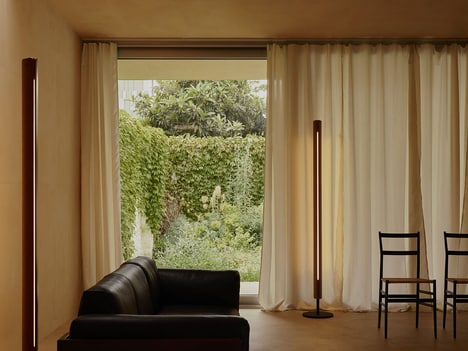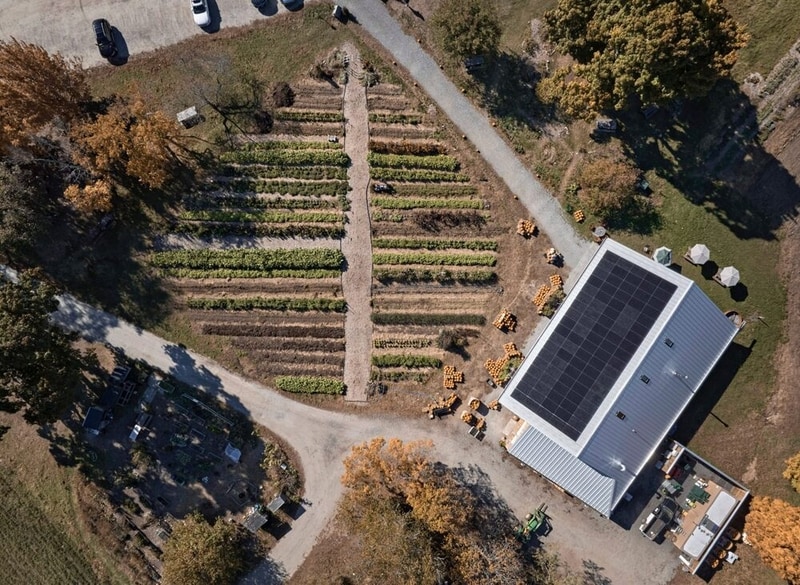
The Land’s Sake Farmstand by Payette is a net-zero timber structure built for a non-profit farm in Weston, Massachusetts, designed to function as both a market and community space. The building uses a hybrid timber frame clad in cross-laminated timber, forming a carbon-positive envelope that stores more carbon than it emits. Passive design strategies guide its performance, including deep roof overhangs, operable skylights, and sliding panels that allow the structure to shift between enclosed and open-air use depending on season and weather.
A rooftop solar array generates enough electricity to power the building and contribute energy back to the site. The structure also integrates a high-performance insulated envelope, triple-glazed windows, and a heat recovery ventilation system to minimise energy loss. Timber construction reduces reliance on steel and concrete.
Image Credit: Warren Jagger
Why This Trend Is Growing
- Net-zero Timber Buildings
- A shift toward structures that generate as much energy as they consume highlights opportunities for buildings that combine mass timber with on-site renewables to deliver net-zero performance and lower embodied carbon.
- Passive-adaptive Architecture
- Designs that toggle between enclosed and open-air modes based on weather and season create potential for spaces that dynamically modulate comfort and energy use without mechanical systems.
- Carbon-positive Building Materials
- Materials and assemblies that store more carbon over their lifecycle than they emit enable new product lines and value propositions centered on negative-emissions construction.
Industries Being Reshaped
- Architecture and Design
- Architectural practices that integrate passive strategies with timber engineering can redefine programmatic flexibility and sustainability benchmarks for community buildings.
- Renewable Energy Integration
- Solar and energy-recovery systems paired directly with building envelopes present models for distributed energy assets that shift buildings from energy consumers to site energy contributors.
- Sustainable Forestry and Mass Timber Manufacturing
- Supply chains that certify low-impact harvesting and produce cross-laminated timber at scale open pathways for substituting high-carbon materials and capturing biogenic carbon in structures.