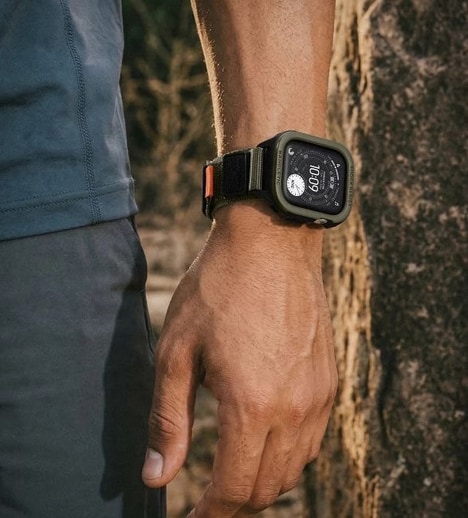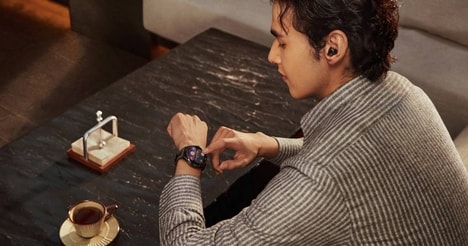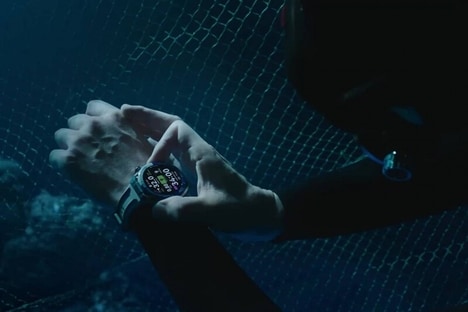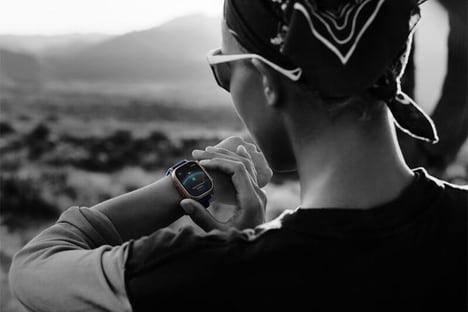
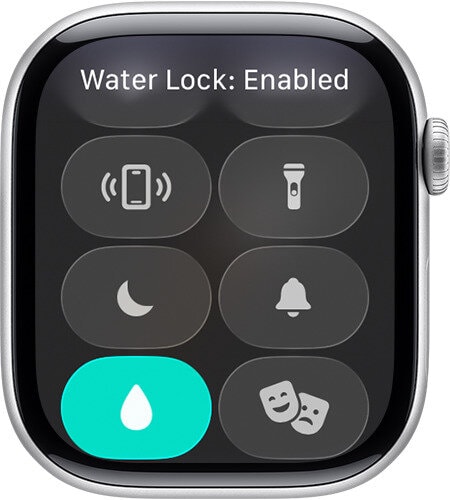
Apple introduced the Water Lock feature on Apple Watch models from Series 2 onward, a function that locks the touchscreen and then expels moisture when you unlock it, featuring a brief audio-driven ejection sequence triggered by the Digital Crown. The system temporarily disables touch input so water pressure and droplets can't cause accidental taps, and it uses short tone cycles while mechanically pushing liquid from the speaker ports.
To activate, users enable the droplet control in Control Center or let workouts auto-engage it; unlocking requires a press-and-hold of the Digital Crown to start the ejection routine. For swimmers or anyone exposing a watch to water, the feature reduces retained moisture that can corrode internals or muffle audio, extending device longevity and supporting the broader trend of habit-driven maintenance features in wearables.
Image Credit: Apple
Key Themes Behind This Trend
- Audio-based Device Maintenance
- Miniature speakers and haptics are becoming functional tools for clearing moisture, dust, and debris from compact electronics without adding bulky hardware.
- Context-aware Wearable Protection
- Sensors and activity modes are enabling devices to automatically shift into protective states during swimming, workouts, or harsh environments.
- Habit-driven Longevity Features
- Routine micro-maintenance prompts embedded into everyday device interactions are extending product life while reinforcing user trust in premium hardware.
Where This Applies
- Wearable Technology
- Smartwatch makers can differentiate through protective features that preserve performance during fitness, outdoor, and aquatic use cases.
- Consumer Electronics
- Water-ejection mechanisms point to broader opportunities for self-preserving phones, earbuds, and portable devices exposed to daily environmental stress.
- Sports and Fitness
- Connected training devices are incorporating durability and maintenance functions that support athletes in wet, sweaty, and high-impact conditions.