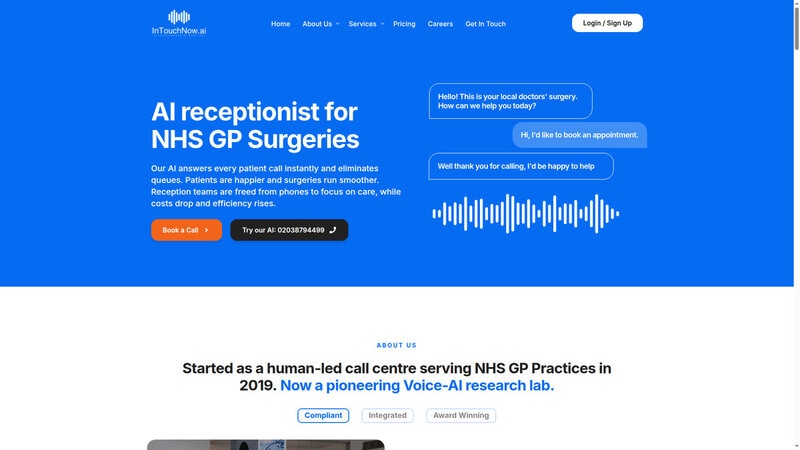
InTouchNow is expanding its AI receptionist services for NHS GP surgeries with fresh seed funding. The company raised £2.3 million to deploy its voice agent in more practices. It turns patient calls into an automated front door for surgeries that need help managing demand.
Two of the planned upgrades stand out: multilingual support and deeper integration with GP electronic patient record systems. Together, these changes can make the receptionist feel less like a bolt-on chatbot and more like an integral part of the surgery workflow. The focus on information governance and clinical safety also fits a healthcare setting where trust matters as much as speed.
For GP practices, this means routine call handling can move to software without requiring staff to rebuild their existing systems. It also raises expectations for voice AI in care, where integration and safety will matter as much as conversation quality. Competitors will need to prove they can fit into real clinic operations, not just answer questions well.
Image Credit: InTouchNow
What's Driving This Trend
- Clinical Voice Automation
- AI receptionists are reshaping patient access by converting routine calls into structured digital workflows that reduce front-desk pressure while preserving clinical safety standards.
- Integrated Patient Records
- Deeper links between voice agents and electronic patient record systems create openings for context-aware automation that fits directly into existing care operations.
- Multilingual Care Access
- Language-inclusive voice AI expands equitable access to primary care by helping diverse patient groups navigate appointments, triage, and basic practice information.
Who This Affects Most
- Primary Care
- General practices face rising demand for automated call handling systems that can support staff capacity without disrupting trusted patient relationships.
- Healthtech
- Healthcare software providers are competing around clinically safe AI tools that combine conversational performance with governance, compliance, and workflow integration.
- Telecommunications
- Voice infrastructure companies are positioned to support always-on healthcare communication channels as AI agents become embedded in patient-facing service models.