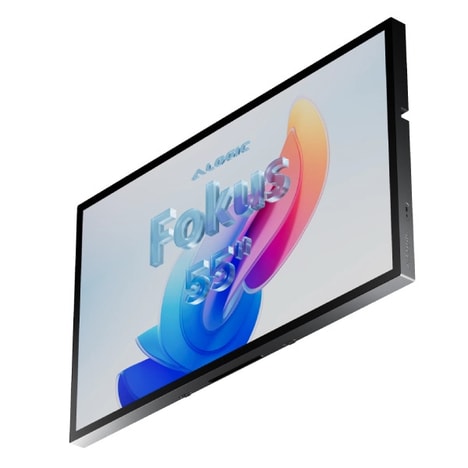
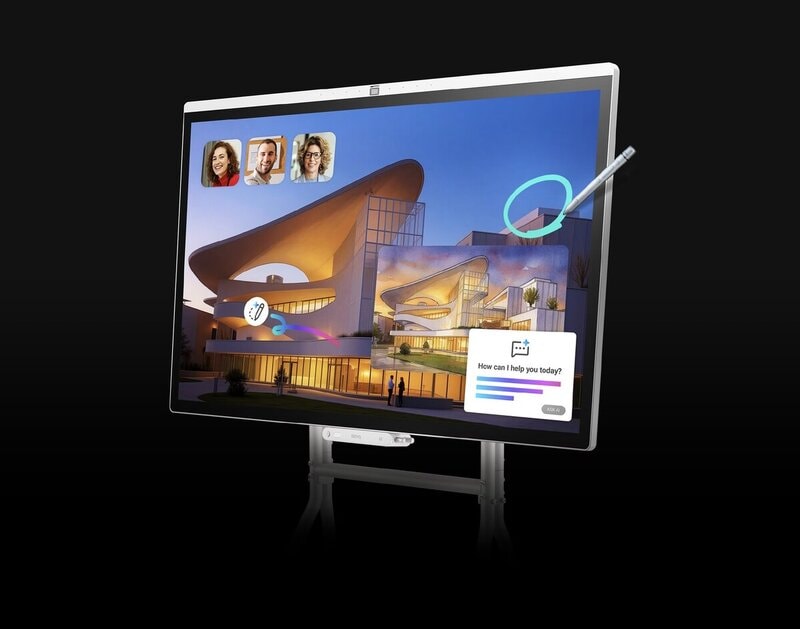
BenQ's CP05 is a collaborative display lineup available in 55-inch and 75-inch sizes, running Android 15 and powered by an octa-core ARM CPU with dual Cortex-A78 and six Cortex-A55 cores. It pairs 16 GB of RAM, 256 GB of storage and a 10 TOPS NPU for local AI, delivering on-device processing for meeting features.
The ADS panels offer 4K resolution, 95% DCI-P3 coverage, Pantone validation, 50-point touch and a claimed peak brightness of 450 nits with a 1200:1 contrast ratio. Hardware highlights include a 50 MP 4K camera with voice tracking, an 8-mic array, dual speakers (plus a subwoofer on the 75-inch), stylus support, NFC login, and a mix of USB, HDMI, and Ethernet ports.
BenQ packages SummarAI functions such as transcript generation, meeting summaries, intelligent framing and gesture controls to streamline collaboration and reduce reliance on external devices. The CP05 also adds modes for medical DICOM viewing, M-Book color tuning and e-paper reading, and is priced at $4,000 for 55-inch and $6,750 for 75-inch.
Image Credit: BenQ
Key Themes Behind This Trend
- On-device Meeting AI
- Local neural processing in office displays signals a shift toward faster, more private collaboration tools that reduce dependence on cloud-based meeting services.
- Integrated Collaboration Displays
- All-in-one screens with cameras, microphones, touch input and software intelligence create new potential for simplified conference room ecosystems.
- Specialized Display Modes
- Purpose-built visual modes for medical imaging, color tuning and e-paper reading broaden the role of office displays across professional workflows.
Where This Applies
- Enterprise Technology
- Smart presentation hardware with embedded AI is reshaping workplace infrastructure by combining compute, communication and display functions in one device.
- Audio-visual Equipment
- Advanced interactive panels are expanding AV value beyond screen quality into intelligent automation, user authentication and multimodal control.
- Healthcare Technology
- DICOM-compatible office displays introduce opportunities for flexible clinical review environments where collaboration and diagnostic visualization converge.