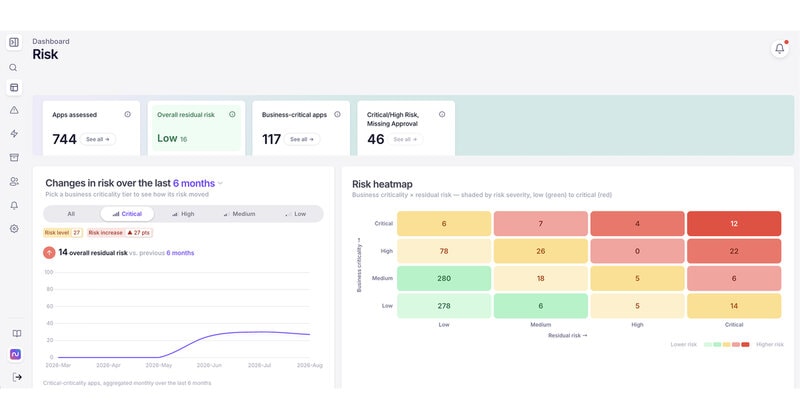
Nudge Security is introducing Adaptive Risk Management to continuously evaluate how SaaS and AI application risks change after initial approval. Rather than relying on periodic vendor assessments, the platform recalculates risk scores using more than 30 factors, including application access, sensitive data, AI agent connections, authentication methods, and vendor security posture. An AI model also automatically classifies application criticality, while the platform identifies control gaps and recommends actions such as enabling SSO or closing stale OAuth grants.
The approach gives security teams a more current view of third-party exposure as employees adopt new tools and integrations. By connecting changing risk directly with prioritized controls, Nudge Security can reduce the manual work involved in monitoring large software portfolios. For the company, the capabilities strengthen its position beyond SaaS discovery by extending its platform into ongoing enterprise risk management and remediation.
Image Credit: Nudge Security
What's Driving This Trend
- Continuous Saas Risk Scoring
- Dynamic risk models create room for security platforms that assess application exposure in real time as access, data flows, and vendor conditions shift.
- AI-driven Application Criticality
- Automated classification of business-critical tools supports more precise governance across sprawling SaaS and AI portfolios.
- Contextual Control Remediation
- Risk-linked recommendations reveal opportunities for systems that prioritize fixes based on actual usage patterns and control gaps.
Who This Affects Most
- Cybersecurity
- Continuous third-party monitoring expands the market for adaptive security products that move beyond static assessments and periodic reviews.
- Enterprise Software
- SaaS management platforms can evolve into broader operational risk hubs by combining discovery, usage intelligence, and remediation workflows.
- Artificial Intelligence
- AI application oversight gains relevance as enterprises require visibility into agent connections, sensitive data access, and changing compliance exposure.