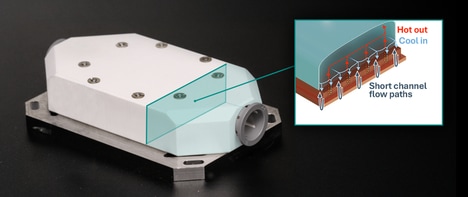
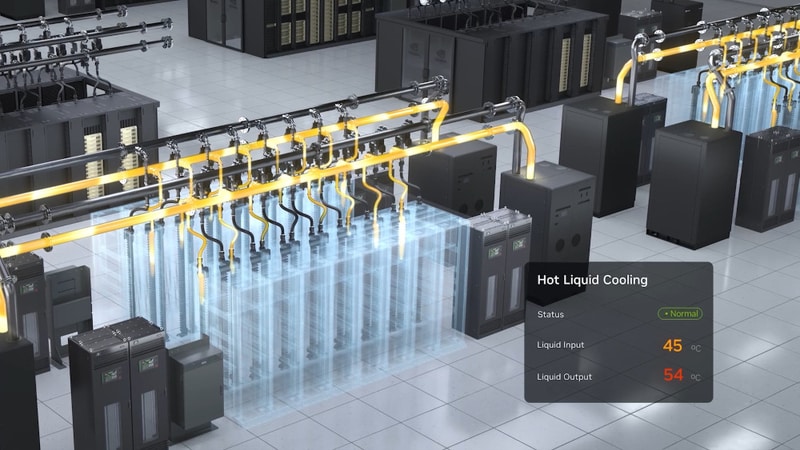
Warm liquid AI cooling is redefining how AI infrastructure manages heat by using high-temperature liquid instead of traditional air cooling. NVIDIA's latest fully liquid-cooled AI servers operate with coolant temperatures of up to 45°C, eliminating internal fans while reducing energy consumption and, in many locations, nearly eliminating water use through closed-loop cooling systems. The architecture also supports higher rack densities and creates opportunities to recover waste heat for nearby buildings, improving the overall efficiency of large-scale AI facilities.
For data center operators, warmer liquid cooling can significantly lower operating costs by reducing electricity used for cooling while minimizing dependence on water-intensive systems. Higher computing density also allows operators to deploy more AI processing power within the same physical footprint. As AI workloads continue to grow, warm liquid AI cooling could become a foundational technology for building more scalable, cost-efficient, and environmentally responsible data centers.
Image Credit: NVIDIA
Why This Trend Is Growing
- Warm Liquid Cooling
- High-temperature coolant systems are reshaping AI server design by reducing fan dependence, lowering cooling energy loads, and enabling denser compute deployments.
- Heat-reuse Infrastructure
- Waste heat from AI facilities is becoming a valuable thermal resource for nearby buildings, district heating networks, and industrial processes.
- Waterless Data Centers
- Closed-loop cooling architectures are reducing reliance on evaporative water systems, creating new efficiency advantages in regions facing water scarcity or utility constraints.
Industries Being Reshaped
- Data Centers
- AI facility operators are gaining new pathways to increase rack density, cut operating costs, and support larger workloads within existing real estate footprints.
- Semiconductors
- Advanced chipmakers are aligning processor, server, and thermal management designs around liquid-cooled architectures that support higher-performance AI hardware.
- Energy Utilities
- Grid and thermal energy providers are positioned around emerging models where data centers function as both major power consumers and recoverable heat sources.