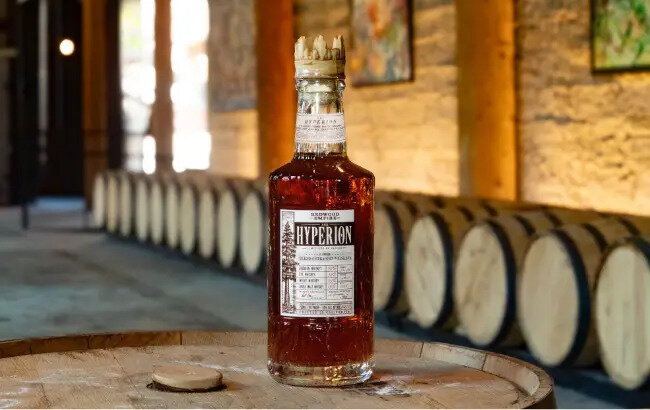
Cross-category whiskey blends are challenging traditional spirit classifications by combining multiple styles into a single expression. Redwood Empire Whiskey’s The Hyperion Batch 001 blends bourbon, rye, wheat whiskey, and American single malt, incorporating more than 10 mash bills and stocks aged between seven and 14 years. The 110-proof release uses a “blend bill” detailing the proportion of each whiskey category rather than a conventional mash bill. Each annual Hyperion release will feature a distinct composition that will not be repeated.
For Redwood Empire, the format provides a way to showcase the depth of its barrel inventory while creating scarcity through limited annual releases. Combining different whiskey categories can also attract enthusiasts seeking less conventional expressions while supporting premium pricing and collectibility. The approach gives distillers another way to differentiate mature inventory, experiment with flavor profiles, and build recurring anticipation around changing yearly releases.
Image Credit: Redwood Empire
Part of the cluster
Boundary Stretching
Distillers recast whiskey through adjacent cues and cultural ties
Explore the cluster


Key Themes Behind This Trend
- Cross-category Spirits
- Hybrid whiskey formats blur established classification boundaries, creating premium positioning for products built around novel flavor architecture and category-defying identity.
- Blend Bill Transparency
- Detailed composition disclosures provide collectors and enthusiasts with a new language for evaluating complexity, provenance, and production intent beyond traditional mash bills.
- Annual Scarcity Releases
- Non-repeating yearly blends turn mature inventory into serialized collectibles, reinforcing anticipation, exclusivity, and secondary-market interest.
Where This Applies
- Whiskey
- Producers gain fresh differentiation by combining bourbon, rye, wheat whiskey, and single malt into expressions that expand consumer expectations of American whiskey.
- Luxury Beverages
- Scarce, high-proof releases with transparent blending narratives strengthen premium pricing models rooted in craftsmanship, collectibility, and limited access.
- Alcohol Retail
- Retailers benefit from distinctive limited-edition spirits that generate enthusiast traffic, allocation demand, and storytelling opportunities across premium shelves.