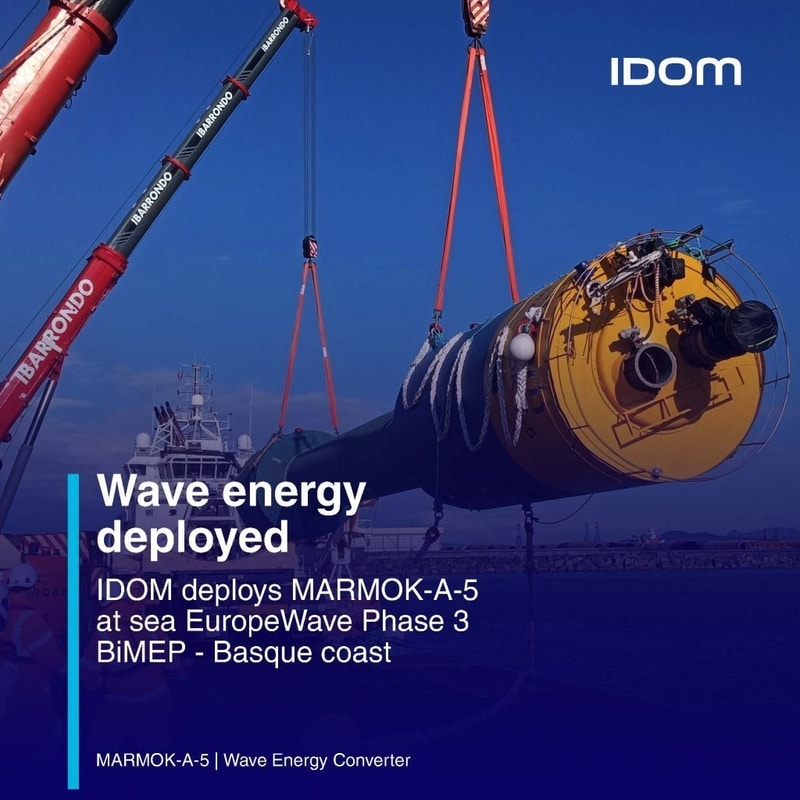
Commercial wave energy systems are advancing as IDOM deploys its upgraded MARMOK-A-5 device at the Bay of Biscay Marine Energy Platform in Spain. The floating energy converter uses oscillating water column technology to generate electricity from ocean waves while improving performance through redesigned turbine blades and optimized offshore infrastructure. The project also demonstrated faster installation and deployment procedures, helping reduce operational complexity for marine energy systems.
The business implications are significant for the renewable energy and offshore engineering sectors. As governments and utility providers search for alternatives beyond solar and wind, wave energy could emerge as a dependable clean power source for coastal markets. Improved efficiency and shorter deployment times may also help reduce operational costs, increasing commercial interest from investors and energy developers. In addition, projects like EuropeWave create opportunities for marine technology suppliers, infrastructure firms, and energy partnerships focused on long-term decarbonization and renewable energy diversification.
Image Credit: IDOM
What's Driving This Trend
- Floating Wave Power Optimization
- Enhanced oscillating water column designs and redesigned turbine blades create potential for significantly higher energy capture efficiency in floating converters.
- Rapid Deployment Modular Offshore Systems
- Shorter installation and standardized modular components enable a shift toward scalable, repeatable offshore deployments that reduce time-to-operation and project risk.
- Diversification of Coastal Renewables
- Growing interest in wave energy alongside wind and solar suggests new hybrid energy portfolios for resilient, location-specific coastal power networks.
Who This Affects Most
- Offshore Engineering and Installation
- Advances in installation procedures and optimized offshore infrastructure open opportunities for specialized vessels, rapid-mobilization platforms, and novel mooring solutions.
- Renewable Energy Utilities
- Utilities exploring alternatives to wind and solar could integrate predictable wave energy into generation mixes to enhance grid stability and seasonal supply diversity.
- Marine Technology Manufacturing
- Improved device performance and turbine blade redesigns indicate demand for high-performance components, material innovation, and customized manufacturing for harsh marine environments.