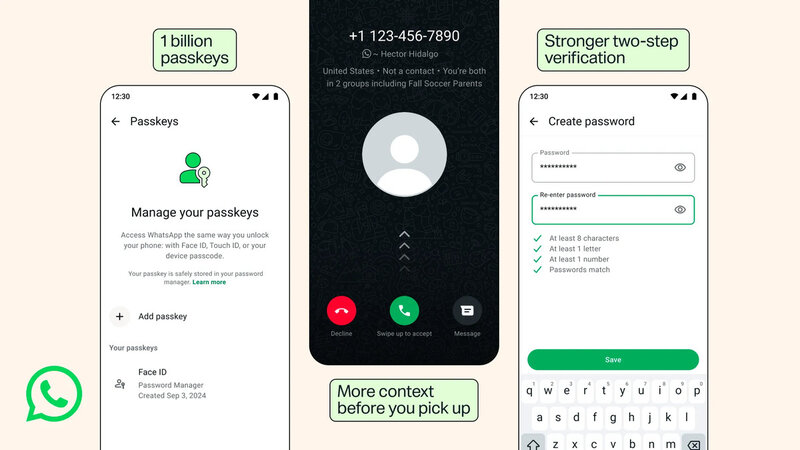
Biometric messaging logins are becoming more widely adopted as WhatsApp expands passkey authentication across its platform. More than one billion people have set up a passkey, allowing users to access their accounts with a fingerprint, facial recognition or device screen lock instead of relying on verification codes or PINs. WhatsApp now supports multiple passkeys for people using both Android and iOS devices, making secure access more convenient across different hardware. The platform is also strengthening two-step verification with full passwords and providing additional context about unknown callers on Android.
For WhatsApp, expanding biometric authentication can reduce login friction while strengthening protection against account takeovers. Supporting multiple passkeys also addresses increasingly cross-platform user behavior. With more than one billion users already adopting the technology, WhatsApp could help normalize biometric and passwordless authentication, encouraging other communication platforms to make secure login methods a standard part of account protection.
Image Credit: Whatsapp
What's Driving This Trend
- Passwordless Messaging
- Messaging platforms are turning biometric passkeys into default access tools, creating opportunities for seamless identity protection that reduces dependence on codes and PINs.
- Cross-device Authentication
- Support for multiple passkeys across Android and iOS reflects growing demand for security systems that follow users across fragmented device ecosystems.
- Contextual Caller Security
- Enhanced unknown-caller information points to a broader shift toward communication tools that combine authentication, fraud detection and trust signals within everyday messaging.
Who This Affects Most
- Digital Security
- Biometric login adoption at mass scale signals new market potential for passwordless identity infrastructure built around convenience and account takeover prevention.
- Mobile Communications
- The integration of passkeys into messaging apps highlights how telecom-adjacent services can differentiate through secure, low-friction user access.
- Consumer Technology
- Device-native biometrics are becoming central to consumer software experiences, expanding opportunities for hardware and platform providers to shape authentication standards.