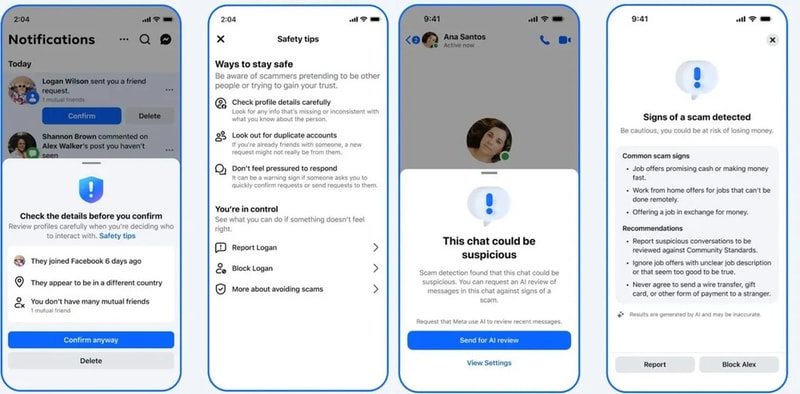
Meta introduced a suite of AI-powered scam protection features across Facebook, WhatsApp and Messenger, designed to surface deceptive behavior more quickly. The systems analyze multiple signals — including text, images and contextual metadata — to flag potential threats, featuring modules for celebrity impersonation detection and domain-link analysis.
The rollout includes specific safeguards: AI that spots fake fan profiles and misleading bios tied to public figures, automated removal of content linking to cloned websites, friend-request warnings that surface account age and mutual connections, and WhatsApp device-linking alerts that show request origin and actions. Messenger users can opt out via Settings > Privacy & Safety > Scam Detection.
For consumers, these tools aim to reduce fraud risk by providing clearer, real-time cues and automatic removals, improving decision-making during suspicious interactions. The move reflects a broader trend of applying machine learning to scale safety controls on major social platforms.
Image Credit: Meta
What's Driving This Trend
- Multimodal Deception Detection
- The blending of text, image and metadata analysis enables detection models that can identify sophisticated deception patterns across channels, opening space for new trust infrastructures.
- Real-time Trust Signals
- Surface-level cues such as account age and mutual connections becoming visible to users generate a new layer of real-time trust data for platform interactions that can reshape decision-making.
- Automated Identity Verification at Scale
- Scaling automated identity checks through AI paves the way for persistent, platform-wide identity attestations that reduce impersonation and credential fraud.
Who This Affects Most
- Social Media Platforms
- A reliance on AI-based moderation introduces opportunities for platforms to embed native trust services and subscription tiers centered on verified interactions.
- Cybersecurity Services
- Expanded scam-detection telemetry produces demand for specialized analytics and remediation tools that integrate across messaging and social feeds.
- Digital Advertising and E-commerce
- Link-analysis and domain-clone eradication create potential for commerce ecosystems to validate ad destinations and protect transaction endpoints at scale.