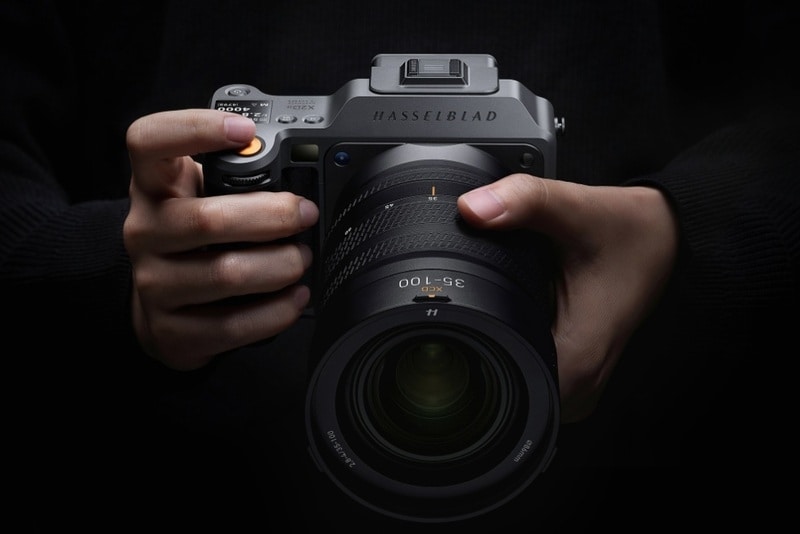
The Hasselblad X2D II 100C is a 100-megapixel medium-format mirrorless camera featuring a backside-illuminated CMOS sensor with 16-bit color depth, capable of rendering approximately 281 trillion colors with a native ISO 50 sensitivity and 15.3 stops of dynamic range. The camera’s in-camera true end-to-end HDR workflow, supported by the Hasselblad Natural Colour Solution with High Dynamic Range (HNCS HDR), captures and processes HDR HEIF or Ultra HDR JPEG files, which can be reviewed on its 3.6-inch OLED touchscreen with up to 1,400 nit peak brightness. Built-in storage comprises a 1 TB SSD delivering write speeds up to 2,370 MB/s and read speeds up to 2,850 MB/s, while a CFexpress Type B slot provides expandable capacity.
Autofocus and stabilization have been enhanced with a new continuous AF-C mode powered by deep-learning algorithms for subject detection and tracking of humans, vehicles, cats, and dogs, alongside 425 PDAF zones and LiDAR–assisted AF-S focusing. A five-axis in-body image stabilization system offers up to 10 stops of correction at the image center (8 stops at the edges), enabling handheld exposure times several seconds long. Ergonomic refinements include a 7.5 percent weight reduction from its predecessor, a redesigned grip, an articulating touchscreen with broad tilt range, a 5D joystick, and eight customizable buttons. Workflow integration is facilitated via Phocus Mobile 2 for wireless tethering and remote operation.
Image Credit: Hasselblad
Key Themes Behind This Trend
- Advanced AI-driven Autofocus
- Deep-learning algorithms powering autofocus and subject tracking signify a leap towards fully automated photography assistance systems.
- Integrated Storage Solutions
- Onboard high-speed SSD storage in cameras reflects a move towards all-in-one devices that reduce dependency on external storage accessories.
- HDR Workflow Innovation
- The development of in-camera end-to-end HDR processing is revolutionizing how photographers capture and produce high-quality images directly from the device.
Where This Applies
- Photography Technology
- Continual advancements in camera capabilities, including enhanced color depth and ISO sensitivity, are transforming amateur and professional photography standards.
- Artificial Intelligence
- The use of AI in cameras for subject recognition and autofocus enhancement illustrates the rapid integration of machine learning into consumer electronics.
- Storage and Memory
- Incorporating large-capacity and high-speed storage solutions within cameras demonstrates the evolving landscape of digital storage industries.