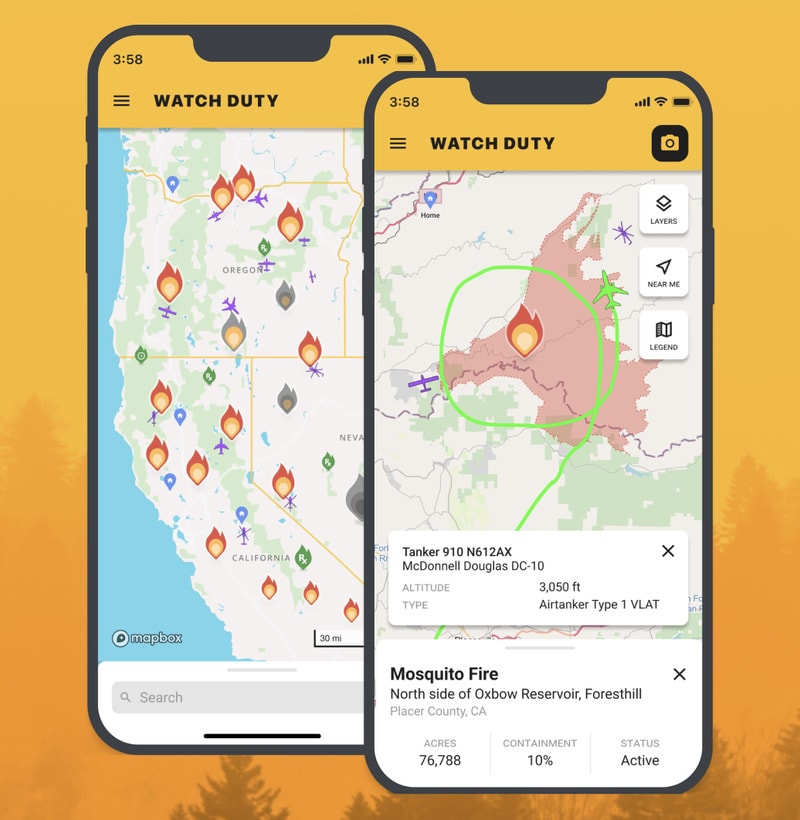
Watch Duty is a nonprofit platform that delivers real-time alerts and updates on wildfires and firefighting efforts. Designed to keep communities informed and safe, it relies on a network of citizen reporters, journalists, and fire professionals who monitor and share verified information.
The platform provides location-based alerts, giving users immediate updates about fires near them and across their region. This real-time transparency helps residents, emergency responders, and businesses make informed decisions during wildfire events. As wildfires increase in frequency and intensity, tools like Watch Duty highlight the growing role of technology and open data in crisis communication. By merging public safety with digital infrastructure, it demonstrates how community-driven platforms can enhance disaster awareness and preparedness on a broad scale.
Image Credit: Watch Duty
What's Driving This Trend
- Citizen-driven Crisis Communication
- Leveraging citizen-reporters and journalists offers a decentralized approach to crisis communication, allowing for more rapid and comprehensive information dissemination.
- Location-based Alert Systems
- Advancements in real-time location tracking facilitate a personalized approach to disaster alerts, enabling individuals to receive crucial information based on their specific locale.
- Integration of Open Data in Public Safety
- Utilizing open data streams in public safety platforms fosters increased transparency and collaboration, enhancing the efficiency of emergency response efforts.
Who This Affects Most
- Disaster Management Technology
- The advent of platform-based solutions in disaster management is transforming how communities prepare for and respond to emergencies.
- Public Safety and Emergency Services
- Innovations in alert systems and digital infrastructure are reshaping traditional public safety protocols and resource allocation strategies.
- Geospatial Technology
- The incorporation of dynamic geolocation data is driving new opportunities in the development of responsive and adaptive alert systems.