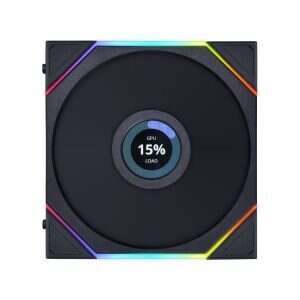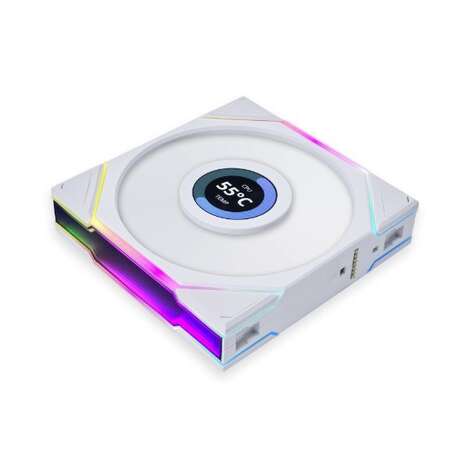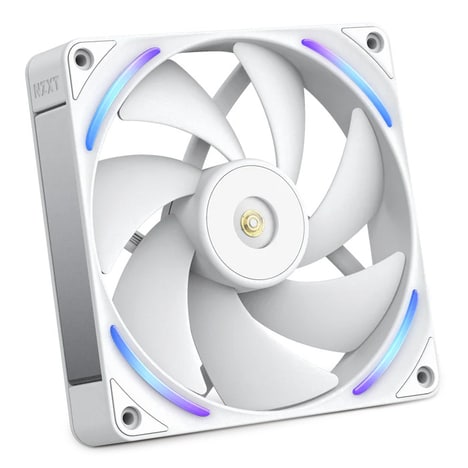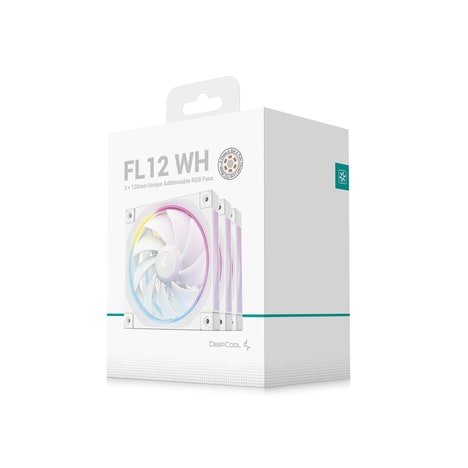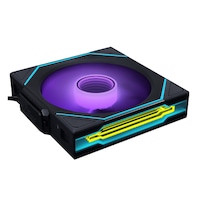
Lian Li’s UNI FAN CL Wireless is an entry‑level case fan designed to optimize thermal performance and airflow management in PC systems. The fan’s 28 mm thickness contributes to enhanced air delivery, achieving a maximum airflow of up to 77.34 CFM and a static pressure of 2.52 mmH₂O. Utilizing Fluid Dynamic Bearing (FDB) technology, the unit is engineered for quiet operation with a maximum noise output of 29.8 dB(A). Additionally, the design includes dual lighting zones—one on the fan blades and another on the side strips—allowing for independent customization of RGB lighting effects via software-based control options.
The UNI FAN CL Wireless supports wireless control through Lian Li’s L-Wireless Sync technology, which operates at 2.4 GHz to manage ARGB lighting and fan speed without the need for a central hub, thereby reducing cable clutter. An updated 4‑pin receiver cable integrates BIOS‑level PWM recognition, and a built‑in tail cable provides supplementary power when required. The product is further complemented by L-Connect 3 software, enabling users to tailor lighting presets and performance settings in accordance with system requirements. These features are aligned with current trends in PC cooling, which emphasize both operational efficiency and configurability.
Image Credit: Lian Li
Key Themes Behind This Trend
- Wireless PC Cooling Solutions
- The rise of wireless control in PC cooling systems enhances user convenience by eliminating cable management challenges.
- Customizable RGB Lighting
- The increasing demand for customizable RGB lighting solutions is transforming aesthetic personalization in PC builds.
- Efficient Airflow Management
- As PC systems become more powerful, optimizing airflow management is crucial for maintaining system performance and longevity.
Where This Applies
- PC Hardware Manufacturing
- Advancements in cooling technologies are driving innovation in manufacturing techniques and product designs for PC components.
- Consumer Electronics Software
- Software development for customizable and collaborative device management is at the forefront of consumer electronics innovation.
- Wireless Technology Integrations
- The integration of wireless technology into traditional PC components reflects a broader industry shift toward cable-free devices.