
Simile announced a $200 million Series B led by Greenoaks, valuing the synthetic-user startup at $2 billion just five months after its $100 million Series A. Founded by Stanford PhD graduate Joon Sung Park, the company develops AI-generated user populations for marketing, product research and experimentation.
The round included participation from Index Ventures, Hanabi, Bain Capital Ventures, A*, Factory, Definition and CVS Health Ventures, with CVS also named as a customer. Simile’s technology draws on Park’s research into generative agents that exhibit persistent, human-like behaviours, applying similar concepts to simulated consumer populations for research scenarios.
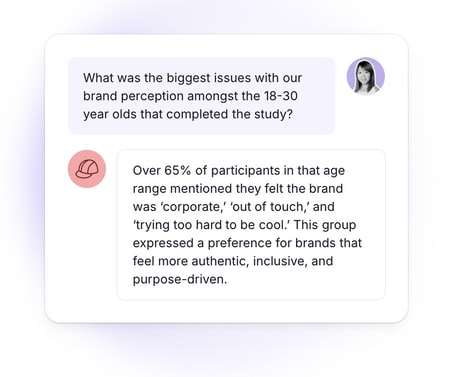
For brands and researchers, synthetic users can accelerate hypothesis testing and expand scenario coverage without relying solely on recruited panels. Simile’s rapid funding growth reflects rising investor interest in AI-powered market research tools that can complement traditional consumer studies with faster, controllable simulations.
Image Credit: Simile
Why This Trend Is Growing
- Synthetic Consumer Panels
- AI-generated respondent groups create room for faster, more scalable research models that reduce dependence on costly recruited panels while expanding demographic and behavioral coverage.
- Generative Market Experimentation
- Simulated audiences make it possible for brands to test product, pricing and messaging scenarios in controlled environments before committing resources to real-world launches.
- Persistent Agent Modeling
- Human-like digital agents with memory and evolving preferences introduce new ways to study long-term consumer behavior, loyalty formation and decision patterns.
Industries Being Reshaped
- Market Research
- Research firms face a shift toward hybrid methodologies where synthetic populations supplement surveys, focus groups and panels with rapid scenario simulation.
- Consumer Packaged Goods
- CPG brands can benefit from simulated shopper insights that support faster packaging, positioning and assortment testing across varied customer segments.
- Healthcare Retail
- Healthcare retailers have opportunities to model patient and consumer responses to services, messaging and store experiences using privacy-conscious synthetic populations.