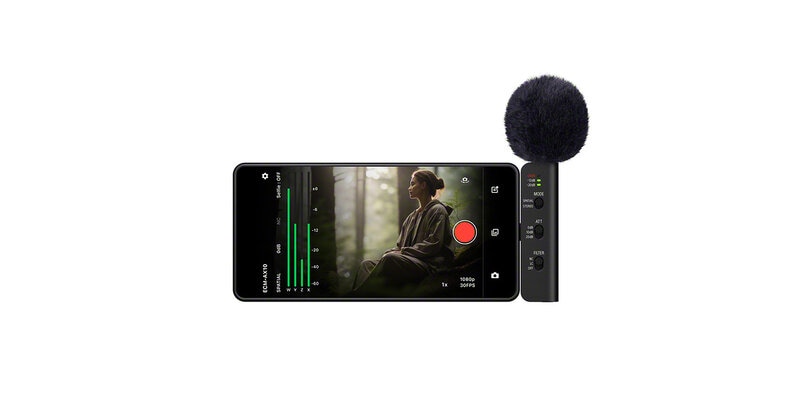
Sony is bringing spatial audio recording to smartphones with the ECM-AX10, a compact microphone designed for vloggers, filmmakers and other mobile creators. It is the first smartphone microphone certified for Eclipsa Audio, an open-source format designed to capture sound from different directions and make videos feel more immersive.
The microphone has four omnidirectional capsules and connects directly to a phone through USB-C, so creators do not need a separate recorder. With Sony's Spatial Audio Video Tool app, users can record in Ambisonics mode and export videos with sound that reflects where different sounds came from. Binaural mode creates a 3D-style mix designed for headphones and platforms that do not support Eclipsa Audio.
At around 24g, the ECM-AX10 keeps the setup small enough for phone-first filming. It gives creators a simpler way to experiment with spatial audio while keeping the recording setup centred around the smartphone rather than adding a separate recorder.
Image Credit: Sony
Why This Trend Is Growing
- Mobile Spatial Capture
- Compact smartphone-connected microphones are turning immersive sound recording into an accessible capability for everyday creators and phone-first production workflows.
- Open-format Audio
- Open-source spatial audio standards create room for broader platform compatibility, creator adoption, and new ecosystems around immersive media publishing.
- Creator-grade Phone Gear
- Lightweight professional accessories are narrowing the gap between mobile content creation and traditional production setups for vloggers, filmmakers, and social media teams.
Industries Being Reshaped
- Consumer Electronics
- Smartphone accessory makers have opportunities to differentiate through compact hardware that adds advanced recording, imaging, and production features.
- Digital Media
- Immersive audio tools can reshape video storytelling by giving creators new ways to produce more realistic, headphone-ready, and platform-adaptable content.
- Social Platforms
- Support for spatial media formats may influence how platforms develop richer content experiences and premium creation features for mobile-first audiences.