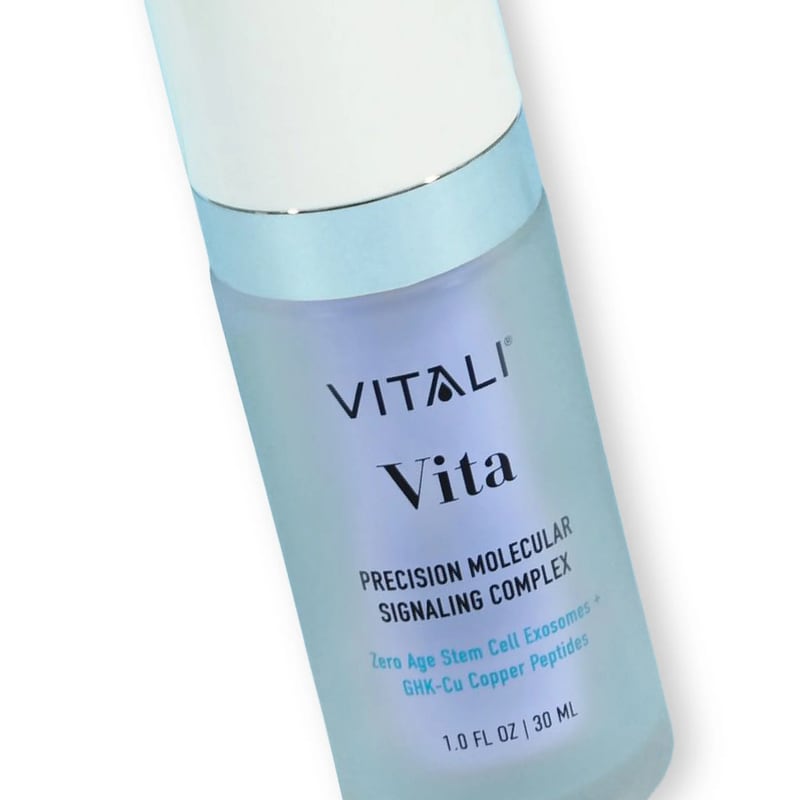
Vitali has unveiled Vita — a next-generation skin renewal formula that combines Zero Age Human Mesenchymal Stem Cell Exosomes with a targeted suite of antioxidants, including Superoxide Dismutase, Glutathione, and THD Vitamin C, along with GHK Cu copper peptides. This creates a precision molecular signalling complex designed to refresh, protect, and strengthen skin by supporting repair, youthful function, and long-term responsiveness.
A key to the skin renewal formula is the Human Mesenchymal Stem Cell Exosomes, which are signaling molecules that instruct skin cells to behave in a more youthful manner. In essence, Vitali's Vita uses exosome signalling biology to communicate directly with skin cells, creating an optimal environment for repair and renewal. The antioxidant blend, on the other hand, defends against environmental stressors, and the copper peptides promote remodelling of skin density and texture. Together, these address the multiple mechanisms that contribute to visible aging from different angles.
Image Credit: Vitali
Why This Trend Is Growing
- Exosome-based Signalling Therapeutics
- Enables targeted cellular communication strategies that could shift topical products from passive protection to active cell-state modulation.
- Antioxidant-enhanced Precision Formulations
- Combines curated antioxidant cocktails with molecular delivery systems to create formulations that respond differentially to environmental oxidative stress.
- Peptide-driven Skin Remodeling
- Generates opportunities for bioactive peptide complexes to orchestrate extracellular matrix reorganization and long-term textural improvements.
Industries Being Reshaped
- Dermatology Skincare
- Positions clinical skincare brands to incorporate biologically instructive ingredients that bridge cosmetic benefits and therapeutic-grade outcomes.
- Biotech Cosmetic Ingredients
- Creates demand for scalable, GMP-grade exosome and peptide production platforms that supply advanced actives to formulators.
- Regenerative Medicine Aesthetics
- Opens pathways for aesthetic clinics to integrate signaling biology into minimally invasive treatments that emphasize tissue responsiveness rather than replacement.