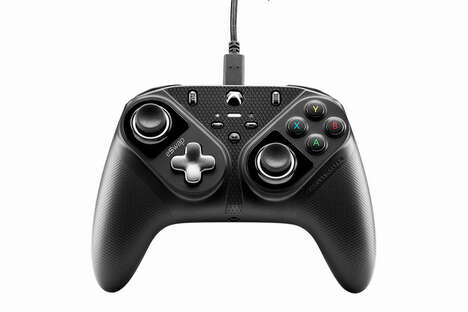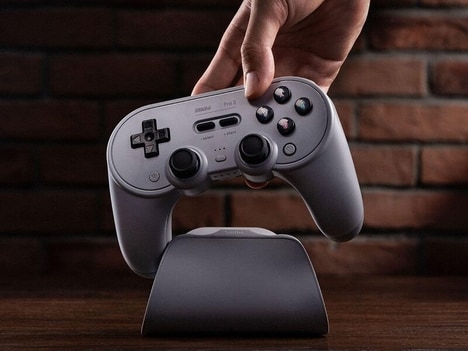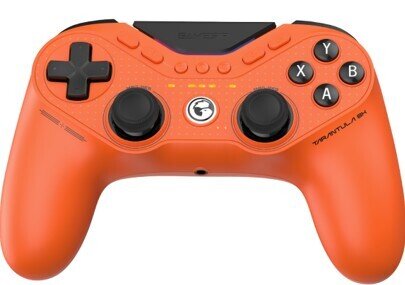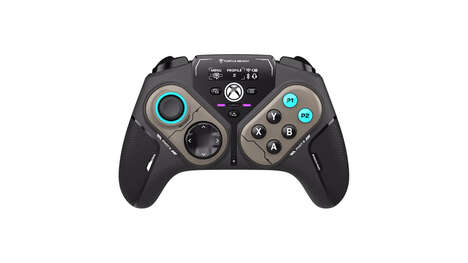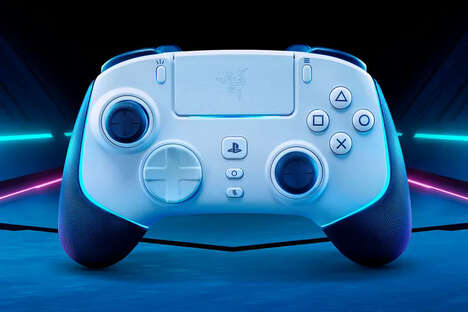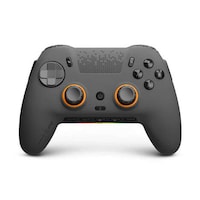

The Valor Pro Wireless from SCUF is a performance-focused controller designed for competitive play across Xbox and PC platforms, offering a compact Xbox-layout chassis with ergonomic refinements, four remappable rear paddles, adjustable instant triggers, and onboard profile switching for rapid control remapping. The controller incorporates SCUF’s Endurance TMR (Tunnel Magnetoresistance) thumbsticks to address stick‑drift and claims increased durability and consistent precision over the device lifespan.
Connectivity and input performance are emphasized through multi‑mode connection options inclduing Bluetooth, low‑latency wireless, and wired USB, with a 1000 Hz polling rate available for PC to reduce input latency and support ultra‑responsive gameplay. Additional features include dual audio scroll wheels for independent headset and game/chat mixing, a companion app for deeper customization, up to 17 hours of battery life, and user‑tunable deadzones and trigger travel, positioning the Valor Pro as a configurable pro‑style gamepad for high‑performance users.
Image Credit: SCUF
Why This Trend Is Growing
- Pro-level Gaming Accessories
- Emerging demand for gaming accessories tailored for competitive eSports emphasizes the need for innovative design and feature sets, such as SCUF's Valor Pro controller's ergonomic refinements and customizable inputs.
- Advanced Input Technologies
- Technological advancements like Endurance TMR thumbsticks present opportunities to mitigate common gaming issues such as stick drift, increasing device lifespan and precision.
- Multi-mode Connectivity Options
- Adoption of versatile connectivity methods, including Bluetooth and low-latency wireless, offers gamers greater flexibility and an optimized experience across devices.
Industries Being Reshaped
- Gaming Peripherals
- Companies specializing in gaming peripherals have an opportunity to integrate cutting-edge ergonomic features and durability-focused technologies into new product lines.
- Wireless Technology
- The proliferation of low-latency wireless technology is reshaping the landscape of gaming input devices, enabling faster response times and enhanced game interaction.
- Consumer Electronics
- The consumer electronics industry can capitalize on the trend toward highly configurable and customizable devices, driven by a growing user base seeking personalized gaming experiences.