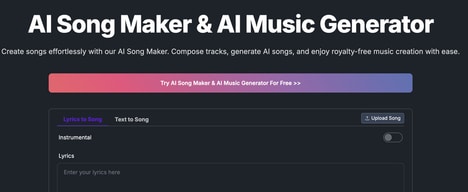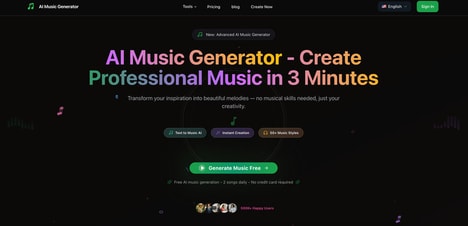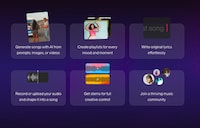

MusicMaker.im's Audio to Music tool uses artificial intelligence to transform uploaded audio clips — voice memos, hummed melodies, or instrumental snippets — into fully produced music tracks. The platform analyzes the input for timbre, rhythm, and stylistic characteristics, then generates a composition that mirrors those qualities. Users can customize outputs by specifying song descriptions, lyrics, title, and style preferences before generating, with an "Inspire Me" prompt field for more open-ended creative direction.
The platform supports multiple AI models, ranging from Music AI V3.5 to V5.0, alongside options like MiniMax Music for structured outputs up to eight minutes and Mureka AI O1 for multilingual generation. New users start with 50 free credits, and tracks can be set to public or kept private upon completion. An integrated AI Lyrics Generator and AI Rap Generator round out the suite for creators working across different formats.
What's Driving This Trend
- Voice-to-track Translation
- A growing ability to convert simple voice memos and hummed melodies into finished tracks presents new routes for democratizing songwriting and redistributing rights and royalties.
- Multimodal Music AI
- Systems that combine timbre, rhythm, lyrics and style inputs enable richer automated composition pipelines that could replace portions of arranger and session musician workflows.
- Personalized AI Compositions
- On-demand generation of bespoke songs tailored to user metadata and preferences creates potential for scalable one-to-one music products and novel licensing models.
Who This Affects Most
- Music Production
- AI platforms that produce full arrangements from raw audio can shift studio economics by reducing reliance on traditional recording sessions and specialized session players.
- Advertising and Branded Content
- Automated composition tools capable of generating style-matched jingles and themes could enable brands to obtain unique, cost-effective sonic identities at scale.
- Education and E-learning
- Tools that translate student hummed melodies into arranged pieces may transform music pedagogy by offering personalized composition feedback and portfolio-ready outputs.