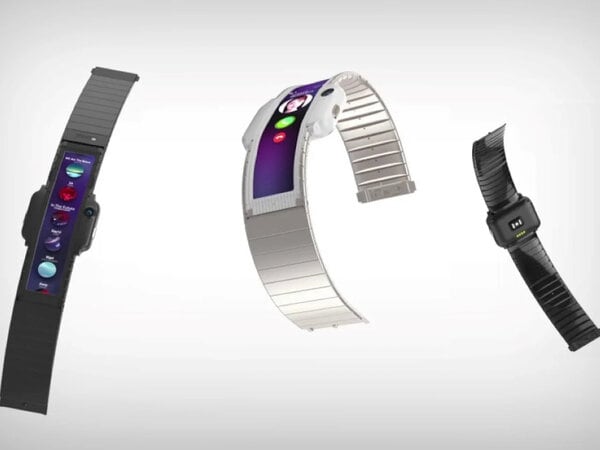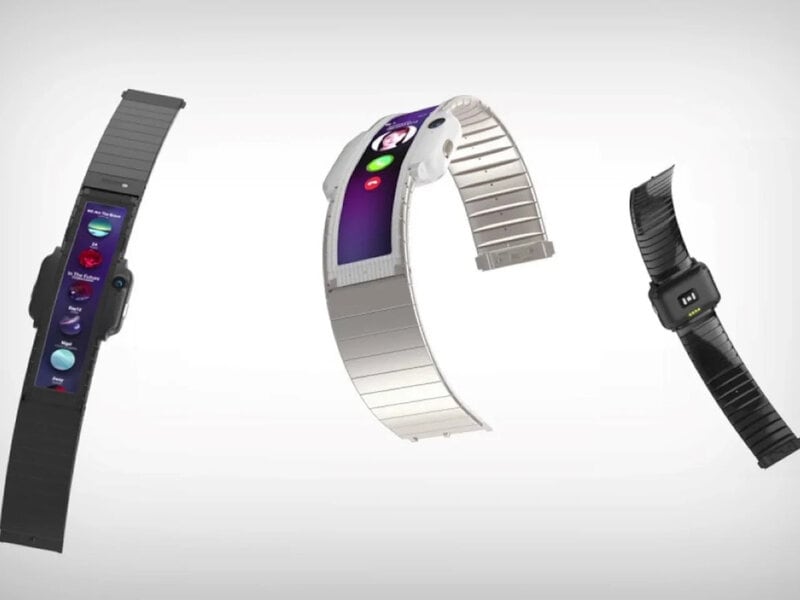
Motorola pivoting wearable reconfigurable screen is described in US Patent 12,693,705, outlining a wearable device that transitions between smartwatch, handheld display, and self-standing screen configurations. The concept uses a flexible display integrated across the outer surface of the wristband, allowing the screen to wrap around the wrist during wear before unfolding into a wider landscape-oriented format. A pivoting strap mechanism enables the transformation, while a third configuration folds part of the display into an L-shaped stand for hands-free desktop viewing.
Unlike earlier wrist-mounted smartphone concepts, the patented design begins as a conventional smartwatch before expanding into a larger display when additional screen space is required. The reconfigurable form factor relies on flexible display technology integrated throughout the band rather than a fixed watch face. Patent illustrations highlight transitions between wearable and handheld modes while emphasizing the hinged strap architecture that supports multiple viewing positions.
Image Credit: Motorola
Key Themes Behind This Trend
- Reconfigurable Wearables
- Flexible form factors that shift between wrist-worn, handheld, and desk-ready modes create new possibilities for devices that adapt to changing productivity and media needs.
- Band-integrated Displays
- Screen surfaces extending across wearable straps point to expanded interface real estate beyond the traditional watch face, reshaping how compact devices deliver information.
- Multi-mode Personal Screens
- Hybrid display designs combining portability, wearability, and hands-free viewing suggest emerging demand for single devices that replace multiple small-screen tools.
Where This Applies
- Wearable Technology
- Smartwatch makers are positioned to differentiate through transformable hardware that increases utility without abandoning familiar wrist-based formats.
- Flexible Electronics
- Advances in bendable displays, hinges, and durable substrates support new device categories where screens become structural elements rather than fixed panels.
- Mobile Computing
- Compact computing ecosystems may be reshaped by expandable personal displays that bridge the gap between smartwatches, smartphones, and portable productivity screens.