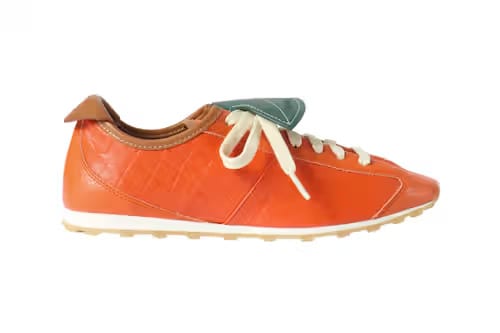
The Jacquemus Orange Sneaker transforms a familiar fruit into a luxury footwear design through textured materials and understated detailing. Crafted from grained and crocodile-embossed leather in a vibrant soft orange hue, the upper mimics the texture of citrus skin while maintaining the label's minimalist aesthetic. The silhouette is defined by an almond-shaped toe, flat laces, and embossed Jacquemus logos on the tongue and heel tab. A removable leather "orange leaf" tag, embossed with the brand's logo, completes the playful concept with a collectible finishing touch.
The new sneaker sits on Jacquemus' signature Rond-Carré rubber outsole, delivering durability alongside a distinctive profile. A removable leather-covered insole enhances comfort, while the slim-fit construction is designed to be worn a size up for an improved fit. It balances a bold color with restrained branding.
Image Credit: Jacquemus
Part of the cluster
Sneaker Fusion
Footwear brands are enhancing athletic designs with fashion, heritage & convenience
Explore the cluster
What Makes This Trend Stand Out
- Produce-inspired Luxury
- Fruit motifs translated through premium textures signal whitespace for fashion houses to turn everyday natural references into collectible, high-margin design stories.
- Tactile Minimalism
- Embossed leathers and subtle surface effects create differentiation in understated products, allowing brands to elevate simple silhouettes through sensory material innovation.
- Collectible Sneaker Details
- Removable branded tags and small narrative accessories add post-purchase value, expanding sneakers into modular objects with personalization and resale appeal.
Sectors Adopting This
- Luxury Footwear
- Premium sneaker makers can merge playful concepts with refined construction to reach consumers seeking expressive products without heavy branding.
- Fashion Accessories
- Detachable leather charms, tags, and themed add-ons present a path for accessory lines to extend product storytelling beyond the core item.
- Materials Design
- Specialized embossing, graining, and color treatments offer suppliers new relevance as brands look for distinctive surfaces that imitate organic forms.