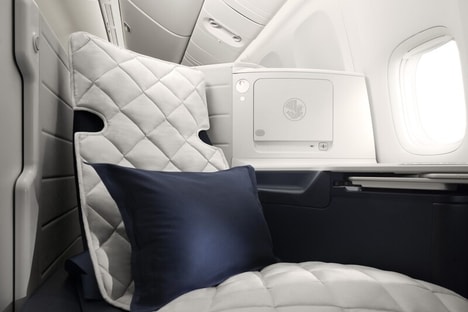

Bombardier and ELIE SAAB unveiled a bespoke Haute Couture Global 8000 cabin design for the world's fastest business jet, marking the first collaboration to translate couture design principles into a fully certifiable aircraft interior. The cabin centers on a spacious lounge area defined by flowing architectural lines, extended sightlines and a warm, balanced material palette designed to evoke a refined living environment at altitude.
Bombardier's engineering teams worked closely with ELIE SAAB to meet the technical and safety requirements of business aviation while preserving the couture-inspired aesthetic. The unveiling took place at Bombardier's Aviator Lounge in Monaco during the Formula 1 Grand Prix, and the cabin is now available to Global 8000 customers as a selectable option.
Bombardier and ELIE SAAB show how luxury fashion brands are extending their influence beyond apparel to shape premium travel experiences.
Image Credit: Bombardier/ELIE SAAB
What's Driving This Trend
- Couture Aviation Interiors
- Luxury fashion codes are moving into aircraft cabin design, creating new potential for certifiable interiors that combine brand storytelling, craftsmanship and high-performance engineering.
- Branded Private Mobility
- Premium travel environments increasingly function as extensions of lifestyle brands, opening space for partnerships that turn jets, yachts and vehicles into immersive identity-driven experiences.
- Residential Cabin Design
- At-altitude interiors are adopting the proportions, materials and sightlines of refined living spaces, signaling demand for private aviation products that feel more like bespoke residences than transport cabins.
Who This Affects Most
- Business Aviation
- Aircraft manufacturers are differentiating flagship jets through curated design collaborations, where safety-certified luxury customization becomes a competitive feature for ultra-high-net-worth customers.
- Luxury Fashion
- Couture houses are expanding beyond apparel into experiential environments, positioning design heritage as a premium asset across travel, hospitality and mobility markets.
- Interior Design
- High-end interiors are converging with advanced engineering requirements, creating opportunities for studios that can translate aesthetic concepts into regulated, functional and transport-ready spaces.