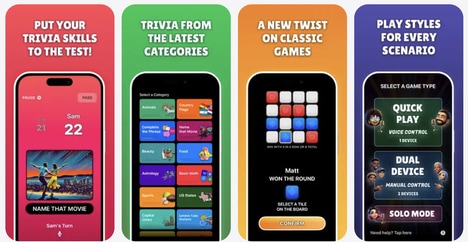
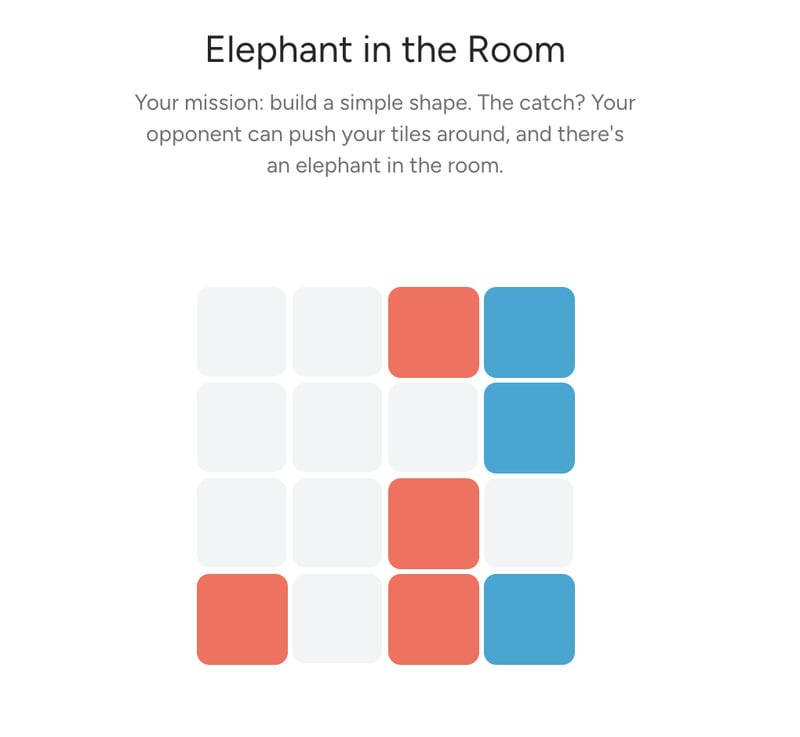
Elephant in the Room is a strategy-based game that combines simple objectives with disruptive mechanics. Players aim to construct a designated shape using tiles on a shared board. The twist lies in interactive gameplay: opponents can move tiles, introducing unpredictability and requiring adaptive strategies.
Additionally, a metaphorical “elephant in the room” mechanic adds an extra layer of complexity, creating obstacles that must be navigated carefully. The game emphasizes planning, foresight, and reactive decision-making, appealing to individuals who enjoy tactical challenges. Its deceptively simple rules make it accessible to a wide audience while still providing depth for competitive play. By integrating cooperative and adversarial dynamics in a concise format, Elephant in the Room encourages critical thinking, spatial reasoning, and strategic engagement for both casual and serious players.
Image Credit: Elephant In The Room’
Key Themes Behind This Trend
- Interactive Gameplay Mechanics
- Game developers are increasingly incorporating interactive elements that alter traditional gameplay structures, leading to dynamic and unpredictable gaming experiences.
- Multi-layered Strategy Games
- The rise of games with multiple strategic layers offers opportunities to engage both casual and competitive players by providing depth within seemingly simple rule sets.
- Collaborative-adversarial Dynamics
- Games that blend cooperative and adversarial roles allow players to experience complex social interactions and strategic maneuvering in a single platform.
Where This Applies
- Board Games
- Innovations in board game mechanics and design, like those found in 'Elephant in the Room', are creating opportunities for new market segments and cross-generational appeal.
- Educational Technology
- The strategic planning and problem-solving required in complex games can be leveraged in educational tools to enhance critical thinking and cognitive skills.
- Digital Gaming Platforms
- Integrating board game mechanics with digital interfaces presents a fertile ground for hybrid gaming experiences that appeal to diverse audiences accustomed to both digital and analog games.