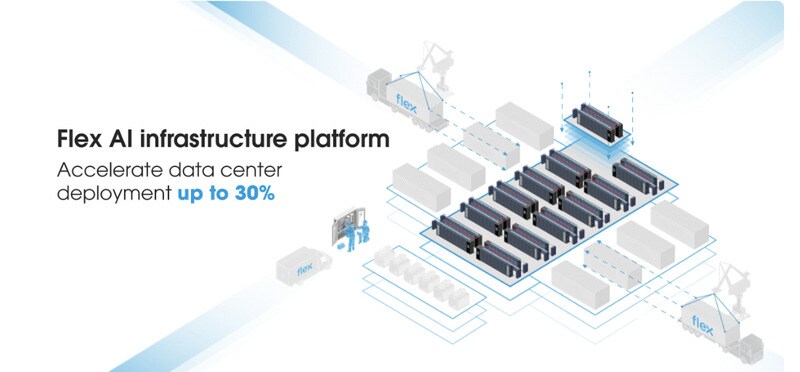
The manufacturing company Flex has introduced a new platform for data center infrastructure. This innovation is designed to consolidate essential components such as power systems, cooling technology, and computing hardware into pre-configured, modular units.
Flex's approach to data center infrastructure is intended to streamline the construction and deployment process for large-scale facilities supporting artificial intelligence and high-performance computing. The company claims that its innovation has the potential to reduce set-up times by 30%.
Flex's platform includes several specific product innovations, such as high-capacity power racks capable of handling one megawatt of energy, a capacitive energy storage system to stabilize the electrical supply, and modular cooling distribution units. The prefabricated modules are assembled off-site, which aims to minimize on-site labor and accelerate the overall construction timeline. The company leverages its global manufacturing and supply chain network to support the production and delivery of these integrated systems.
Image Credit: Flex
Why This Trend Is Growing
- Modular Data Center Solutions
- The adoption of pre-configured, modular units in data centers presents opportunities to drastically cut set-up times and streamline large-scale facility operations.
- Integrated Power and Cooling Systems
- Power and cooling systems that are integrated into modular solutions enhance energy efficiency and provide opportunities for innovation in sustainable data center infrastructure.
- Off-site Prefabrication
- Prefabrication of data center components off-site can revolutionize construction timelines, minimizing manual labor and enhancing scalability.
Industries Being Reshaped
- Data Center Construction
- The shift toward modular construction in data centers could transform conventional building methods, allowing for faster, scalable deployments.
- High-performance Computing
- Enhanced data center infrastructure supports the growing demands of high-performance computing, offering significant efficiency improvements.
- Supply Chain Management
- Leveraging global supply chain networks for the delivery of technology systems provides an avenue for optimizing resource allocation and inventory management.