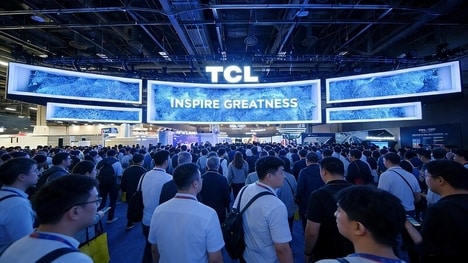
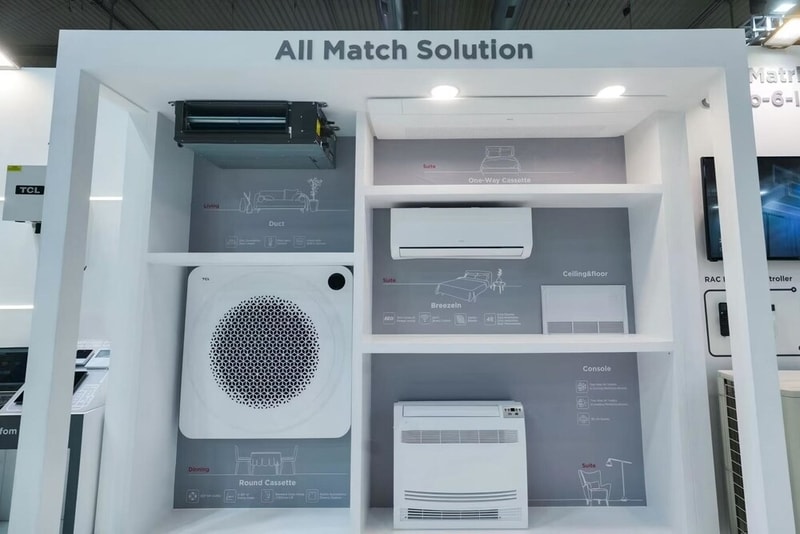
TCL has presented its latest AI-powered air conditioning solutions at the MCE 2026 exhibition in Milan. The brand is showcasing a range of residential and light commercial products designed around three core technological pillars — AI Health, AI Voice Control, and AI Energy-Saving.
TCL's AI-powered air conditioning solution lineup includes the FreshIN 3.0, the VoxIN, the SaveIN, the BreezeIN, a light commercial air conditioner known as TCL Free Match outdoor unit, and the 200Pa high‑static ducted system. The FreshIN 3.0 model, for example, features fresh air ventilation, intelligent purification, real-time air quality monitoring, and a quadrupole noise reduction system that operates as quietly as 16 decibels. The VoxIN option, on the other hand, emphasizes hands-free offline voice control and reliable heating performance in temperatures as low as -40 degrees Celsius. The SaveIN and BreezeIN units incorporate T-AI energy-saving algorithms capable of delivering additional efficiency gains beyond already impressive A+++ energy ratings.
Image Credit: TCL
What's Driving This Trend
- AI Health Monitoring
- Integration of real‑time air quality sensors and intelligent purification systems opens pathways for HVAC units to serve as primary indoor health platforms that monitor and respond to pollutants and pathogens.
- Voice-enabled HVAC
- Hands‑free offline voice control combined with extreme‑temperature reliability creates potential for conversational interfaces to become the dominant user experience for climate management in noise‑sensitive and remote environments.
- AI Energy Optimization
- T‑AI algorithms delivering efficiency beyond top energy ratings point to an era where adaptive predictive control systems drastically reduce consumption while balancing comfort and operational lifetime.
Who This Affects Most
- Residential HVAC
- Quiet, low‑noise units with integrated ventilation and health sensors suggest a shift toward multi‑functional home climate systems that prioritize wellness alongside temperature control.
- Light Commercial Cooling
- Modular outdoor units and high‑static ducted systems indicate opportunities for scalable, AI‑driven solutions tailored to small business and mixed‑use buildings with varied zoning needs.
- Smart Home Platforms
- Robust offline voice interfaces and interoperable energy‑saving algorithms imply a convergence where HVAC becomes a central node in broader smart home ecosystems for automation and data‑driven services.