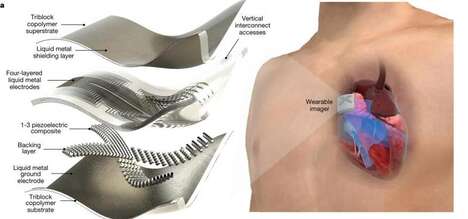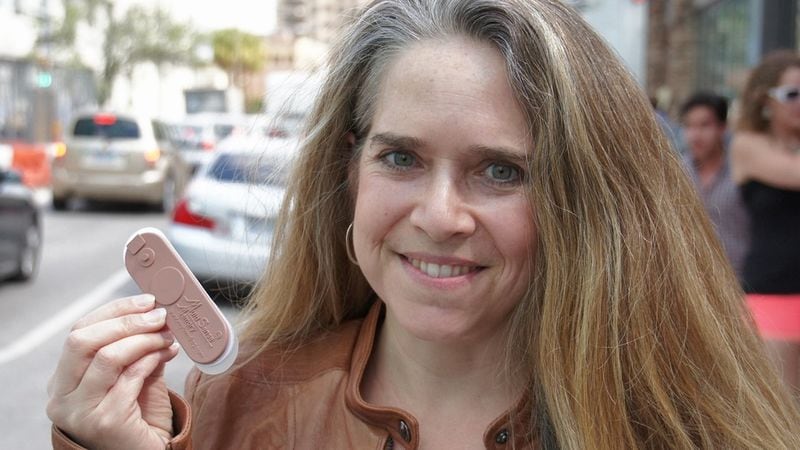
MultiSense Memory is essentially a smart bandage that replaces the need for a stethoscope. It takes on the form of a flexible patch, quite like a traditional Band-aid, but is embedded with sensors to take a baseline vital rating of the person's heart rate, temp and oxygen saturation when attached to the sternum.
Created with diseases such a Ebola in mind, the smart bandage is a safe tool for doctors to use. They will be able to put them on patients and track their vitals from outside the hot zone. Considered a game changer, Mashable writes, "The device, which costs $100 per patch, will have 7 to 10 days of battery life. USAID executives told us that, once in treatment, the average Ebola case runs its course in five days."
Why This Trend Is Growing
- Smart Wearable Medical Sensors
- The use of sensors in wearable medical technology creates an opportunity for a more efficient and accurate diagnosis and treatment.
- Remote Vital Monitoring
- The ability to remotely monitor vital signs using wearable technology has the potential to revolutionize the healthcare industry and provide a safer environment for healthcare professionals.
- Smart Bandages
- The development of smart bandages brings potential for cost-effective and convenient healthcare that can be used in dangerous locations or remote areas.
Industries Being Reshaped
- Healthcare Industry
- The healthcare industry can benefit from the use of smart wearable medical sensors in diagnosing and treating diseases to increase efficiency and accuracy.
- Medical Research Industry
- The medical research industry can leverage remote vital monitoring using wearable technology to conduct clinical trials with less risk to patients in dangerous locations.
- Military and Disaster Relief Industry
- The military and disaster relief industries can benefit from the use of smart bandages for fast, efficient, and cost-effective treatment of injuries and disease in remote or dangerous areas.