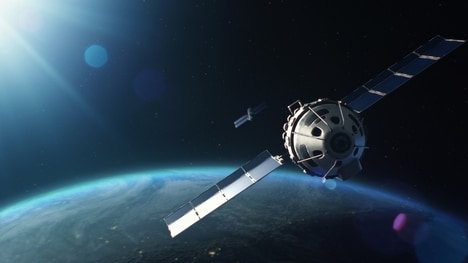

Google is advancing orbital AI computing through Project Suncatcher, a research effort exploring whether scalable machine-learning infrastructure could eventually operate in space. The company is preparing to test its Trillium Tensor Processing Units in low Earth orbit, examining how the chips withstand launch forces, radiation and extreme thermal conditions. Google is also developing space-specific cooling systems using heat pipes and radiators, while future satellite clusters could use high-bandwidth laser connections to link dozens of TPUs and process larger AI workloads.
For Google, orbital computing could create an alternative way to scale increasingly power-intensive AI infrastructure. Satellites in low Earth orbit can access near-constant sunlight, potentially providing substantially more solar power than terrestrial installations. Successfully distributing compute across connected satellites could eventually diversify where Google operates AI infrastructure while supporting continued growth in computational demand. The early missions will provide technical data needed to assess whether the model can scale commercially.
Image Credit: Google
Key Themes Behind This Trend
- Orbital AI Infrastructure
- Space-based compute clusters introduce new pathways for scaling machine-learning capacity beyond land-based data center constraints.
- Radiation-hardened AI Chips
- Specialized processors built for launch stress, radiation exposure and thermal extremes could redefine hardware design for harsh-environment intelligence.
- Laser-linked Satellite Computing
- High-bandwidth optical links between satellites enable distributed AI workloads that function as flexible off-planet compute networks.
Where This Applies
- Cloud Computing
- Orbital deployments expand the geography of cloud infrastructure while creating new models for power access and workload distribution.
- Aerospace Technology
- AI-optimized satellite platforms blend spacecraft engineering with advanced computing requirements, opening markets for modular orbital infrastructure.
- Semiconductors
- Demand for durable, energy-efficient chips in space environments accelerates innovation in packaging, cooling and fault-tolerant processor architectures.