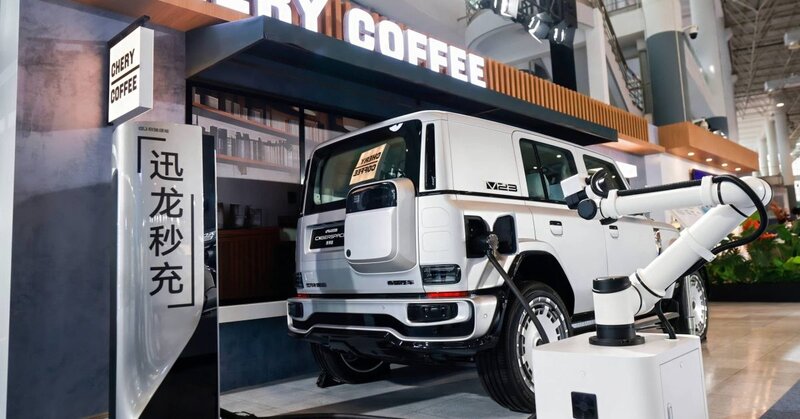
Chery is introducing a megawatt charging system in China designed to cut the time drivers spend waiting at public EV chargers. The technology can add up to 500 kilometres of driving range in five minutes, bringing charging stops closer to the time it takes to refuel a petrol car.
The system uses CheryMind, an AI-powered control layer that adjusts charging power as the battery’s temperature changes. This is designed to maintain charging speed while protecting battery health. Under less favourable conditions, the charger can still add 500 kilometres of range in eight minutes.
Chery is preparing to roll out 100 charging sites across 10 Chinese cities. If deployed as planned, the network could give more drivers access to high-speed charging, particularly those who rely on public stations rather than charging at home.
Image Credit: Electrek
Key Themes Behind This Trend
- Megawatt Fast Charging
- Ultra-high-power charging compresses EV refueling into minutes, creating new potential for public networks that compete directly with petrol station convenience.
- AI-managed Battery Health
- Intelligent charging controls that adapt to temperature and battery conditions can make faster charging safer, more reliable, and more commercially scalable.
- Urban Public Charging Hubs
- Dense city-based charging deployments support drivers without home chargers and reshape expectations for shared, high-throughput EV infrastructure.
Where This Applies
- Electric Vehicles
- Shorter charging windows reduce a key barrier to EV adoption and expand the market for vehicles designed around rapid energy replenishment.
- Charging Infrastructure
- Megawatt-capable stations introduce premium service models and technical requirements that can differentiate next-generation public charging operators.
- Energy Management
- High-power charging networks increase demand for grid optimization, storage integration, and software that balances speed with local energy constraints.