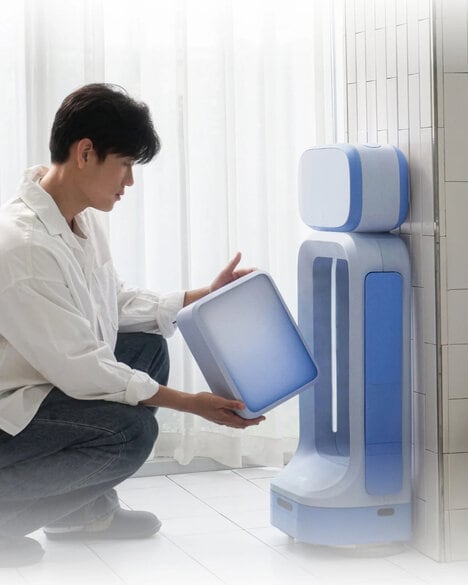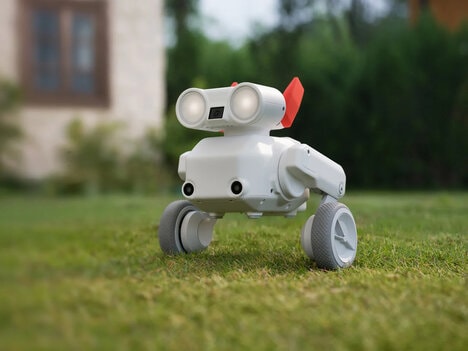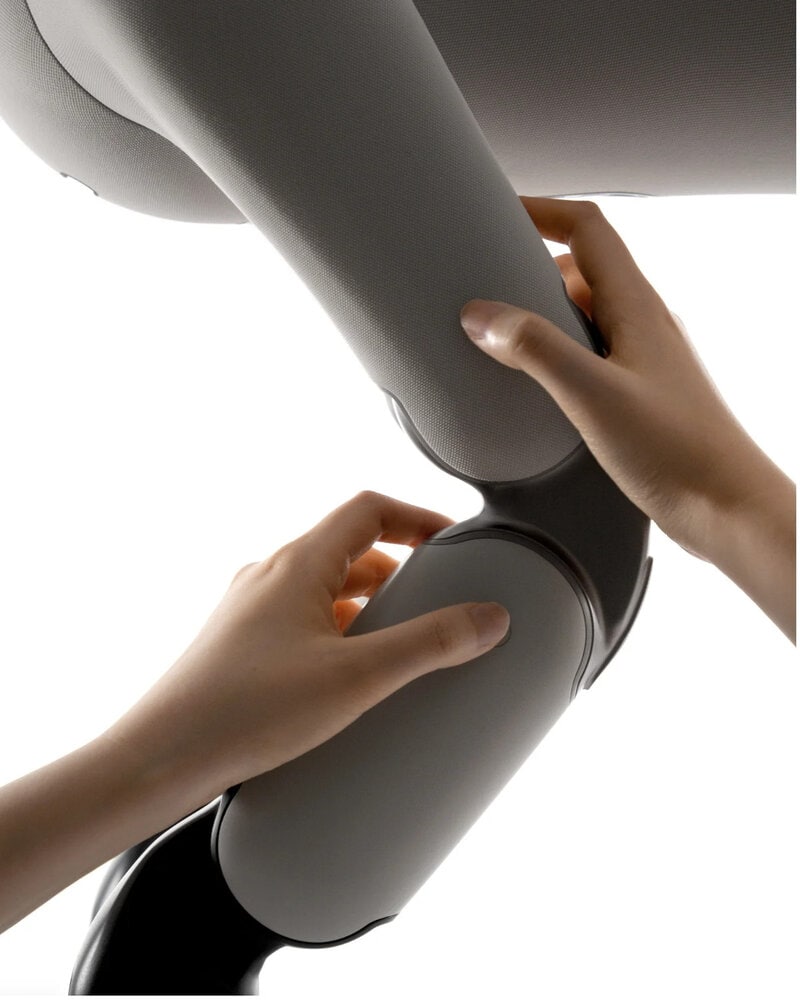
Lassie is a robot companion designed by Jungmin Park, Hyeonji Yang, Junghyun Kim, and Specif.ic to encourage people to go outside and engage with their surroundings. Rather than replicating the mechanics of a living dog, the concept borrows from the behavioral role pets can play in encouraging movement and social interaction. Its rounded body is wrapped in soft fabric, with customizable fabric suits and interchangeable leg modules allowing the robot to adapt to different settings. A subtly integrated camera sits within the face, while the overall form uses sage green, white, gray, and charcoal tones.
The concept is intended to function as an active companion rather than a stationary device, encouraging users to explore their surroundings and interact with other people. Its modular construction allows different leg configurations and exterior treatments, while the soft physical language distinguishes it from more industrial-looking robotic dogs.
Image Credit: Jungmin Park, Hyeonji Yang, Junghyun Kim, Specif.ic
Key Themes Behind This Trend
- Soft Companion Robotics
- Fabric-wrapped, approachable robot forms create room for assistive devices that feel more like social companions than utilitarian machines.
- Modular Mobility Design
- Interchangeable legs and customizable exteriors point to adaptable robotics that can shift across home, outdoor, wellness, and community environments.
- Behavioral Pet Substitutes
- Robots modeled around the social and movement-encouraging role of pets introduce new possibilities for companionship without animal care requirements.
Where This Applies
- Consumer Robotics
- Aesthetic, emotionally engaging robots expand the market beyond task automation toward lifestyle products built around presence, personality, and interaction.
- Health and Wellness
- Movement-promoting companions suggest new product categories for preventive wellness, active aging, and outdoor activity support.
- Smart Home Technology
- Connected companion devices with cameras and adaptive hardware may reshape domestic technology into more mobile, expressive, and relationship-driven systems.