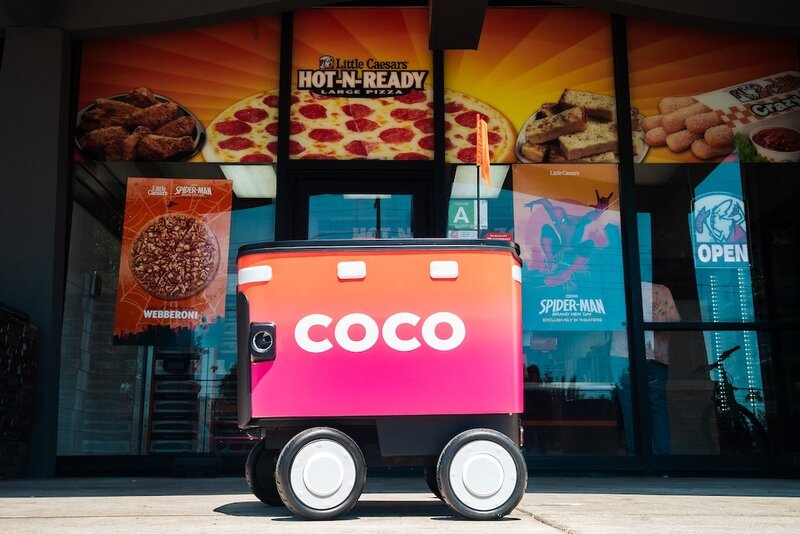
Pizza depends on fast delivery, since every minute between the oven and the customers' doorstep costs heat and fresh-made quality, so Little Caesars is teaming up with Coco Robotics—the world's largest urban robot delivery platform—to launch autonomous pizza deliveries in select United States cities. Throughout Los Angeles, Chicago, and Miami, Coco's robots are currently serving participating Little Caesars locations, supporting efficient, environmentally friendly service, and customers who order from Little Caesars on DoorDash and Uber Eats may have their orders fulfilled by Coco. "With Coco, we're now able to make deliveries even more quickly. Automating deliveries also reduces congestion in our stores and helps get orders out faster during peak periods," said Trish Heusel, VP of Innovation at Little Caesars.
Already, this collaboration has seen Little Caesars recognized with two 2026 Franchise Innovation Awards: Innovator of the Year for Operations & Technology and Most Innovative Use of Technology.
What's Driving This Trend
- Autonomous Food Delivery
- Sidewalk robotics are reshaping last-mile restaurant logistics by preserving product quality while reducing dependence on human couriers during peak demand.
- Platform-integrated Robotics
- Delivery marketplaces are becoming gateways for robotic fulfillment, creating new ways for restaurants to access automation without building proprietary fleets.
- Urban Micro-mobility Logistics
- Compact electric robots are expanding low-emission delivery options in dense cities where congestion, labor costs, and speed pressures challenge traditional operations.
Who This Affects Most
- Quick-service Restaurants
- Automation is introducing faster, more consistent off-premise fulfillment models for high-volume chains competing on convenience and freshness.
- Food Delivery Platforms
- Robotic delivery partnerships are adding differentiated fulfillment capacity that can improve margins, availability, and service reliability across marketplace orders.
- Autonomous Robotics
- Restaurant delivery use cases are accelerating commercialization for urban robots by proving demand in time-sensitive, high-frequency service environments.