



Scientists Rejoice at the Unveiling of the Fingertip Scope
Omar Yusuf — September 16, 2011 — Tech
References: technologyreview & news.discovery
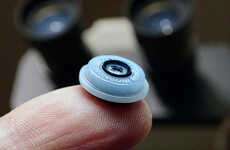
Until the recent exposition of the Fingertip Scope, animal researchers had few options when it came to investigating the neural activity of critters on the move. Luckily, that's all changing and the scientific community expects a deluge of studies to flood in within the coming months and years.
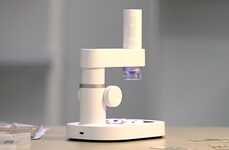
Mice, for instance, are the subject of considerable human curiosity and are subject to most laboratory testing. As a result, it's important that their neural patterns are measured simultaneously as they're exposed to experiments and new medicines. Mounted atop the rodent's head, the Fingertip Scope is capable of measuring the activity of over 200 brain cells -- all while the mouse (or whatever other animal) scurries about its business.
Better yet, the mini microscope is built from readily available, mass-produced goods and costs a paltry $5 to produce. Compare that to the first microscopes in production that set researchers back more than $50,000. Yikes!
Mice, for instance, are the subject of considerable human curiosity and are subject to most laboratory testing. As a result, it's important that their neural patterns are measured simultaneously as they're exposed to experiments and new medicines. Mounted atop the rodent's head, the Fingertip Scope is capable of measuring the activity of over 200 brain cells -- all while the mouse (or whatever other animal) scurries about its business.
Better yet, the mini microscope is built from readily available, mass-produced goods and costs a paltry $5 to produce. Compare that to the first microscopes in production that set researchers back more than $50,000. Yikes!
Trend Themes
1. Miniature Microscope Technology - The development of miniature microscopes presents an opportunity for scientists to study the neural activity of animals on the move.
2. Affordable Neuroscience Tools - The availability of low-cost, mass-produced microscopes allows scientists to conduct neural studies without breaking the bank.
3. Advancements in Brain Cell Measurement - The Fingertip Scope's capability to measure the activity of over 200 brain cells paves the way for new discoveries in neuroscience.
Industry Implications
1. Biotechnology - The biotechnology industry can benefit from integrating mini microscope technology into their research and development processes.
2. Neuroscience - The neuroscience industry has the opportunity to advance its studies with the affordability and accessibility of microscopes like the Fingertip Scope.
3. Scientific Instruments - The scientific instruments industry can tap into the market for miniature microscopes, providing researchers with cost-effective tools for their experiments.
0.4
Score
Popularity
Activity
Freshness