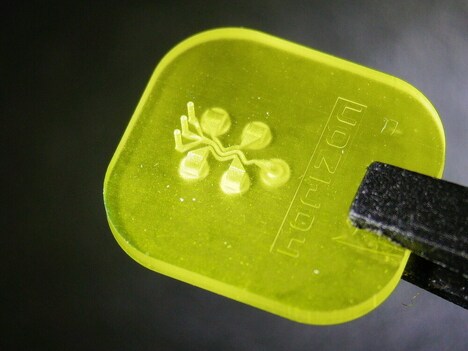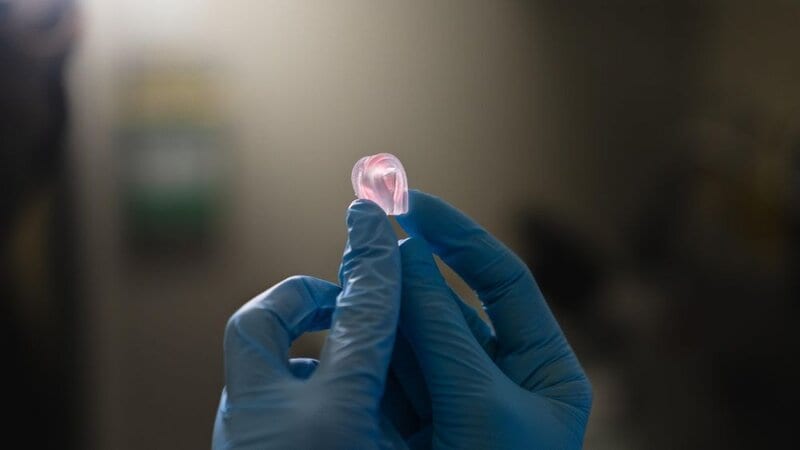
High-durability printable materials are expanding the capabilities of additive manufacturing by overcoming the traditional trade-off between toughness and fatigue resistance. Researchers at EPFL developed double network granular elastomers that can be 3D printed while withstanding repeated stretching, impacts and mechanical stress without compromising durability. Their unique dual-network structure redistributes strain throughout the material, slowing crack growth and extending component lifespan. This combination makes the material well suited for demanding applications such as soft robotics, wearable electronics and biomedical devices that require flexibility and long-term reliability.
For businesses, durable printable materials can reduce maintenance requirements, improve product performance and extend the service life of components exposed to continuous movement. The ability to manufacture stronger, longer-lasting parts with commercial 3D printers also supports faster product development and greater design flexibility. As additive manufacturing continues to evolve, advanced elastomers are positioned to unlock new opportunities for high-performance, customized products across multiple industries.
Image Credit: EPFL
What Makes This Trend Stand Out
- Fatigue-resistant Printing
- Advanced elastomers that maintain strength under repeated motion create possibilities for longer-lasting customized components in products exposed to continuous strain.
- Soft Robotic Materials
- Highly durable flexible materials expand the design space for soft robots that require impact tolerance, repeated deformation and reliable long-term performance.
- Wearable Durability
- Printable materials that combine elasticity with toughness support next-generation wearable electronics designed for daily movement, bending and mechanical stress.
Sectors Adopting This
- Additive Manufacturing
- Commercial 3D printing gains new value from tough elastomers that enable stronger functional parts without sacrificing customization or rapid development cycles.
- Biomedical Devices
- Flexible, fatigue-resistant printable materials enhance prospects for patient-specific devices that must endure repetitive motion and maintain dependable performance.
- Consumer Electronics
- Durable elastomeric components introduce opportunities for more resilient flexible devices, protective housings and wearable interfaces built around long-term usability.