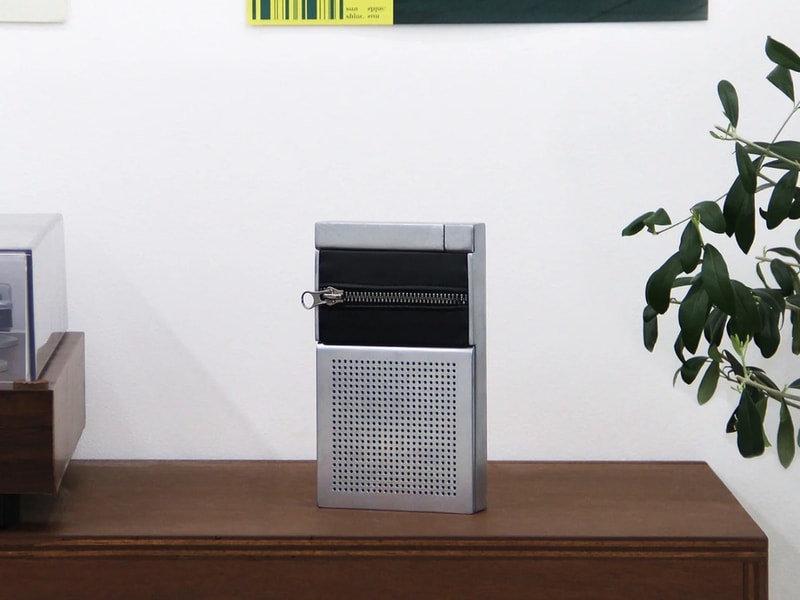
The ZIP speaker concept replaces traditional buttons with a zipper-based interface that controls audio playback through a familiar mechanical action. Designed by Taeyang Kim, Dugyeong Lee, Yejin Na, and Gijeong Shin, the ZIP speaker concept turns the zipper itself into the device’s primary control: pulling it open activates sound, while closing it mutes the speaker. The idea draws from the expression “zip your lips,” translating a common gesture associated with silence into a tactile audio control that requires no screens or touch sensors.
The speaker features a compact aluminum body paired with a dark textile band across the top where the zipper mechanism sits. Beneath the zipper, a perforated metal grille houses the speaker driver, battery, and internal electronics arranged inside a minimal rectangular chassis. The designers developed a functional prototype rather than a digital render.
Image Credit: Taeyang Kim, Dugyeong Lee, Yejin Na, gijeong Shin
What's Driving This Trend
- Tactile Gestural Controls
- A shift toward tactile, gesture-driven inputs creates opportunities to replace screens and touch sensors with mechanical actions that communicate function through familiar haptics.
- Everyday-object Interfaces
- Design language that repurposes common objects as control surfaces suggests new product categories where social gestures and cultural metaphors become the primary interaction model.
- Minimalist Mechanical Uis
- This approach toward pared-back mechanical interfaces highlights potential for low-power, durable devices that rely on simple mechanisms for intuitive user feedback.
Who This Affects Most
- Consumer Audio
- Portable and home audio products could be reimagined with zipper-like controls that blend aesthetic textiles with functional mechanics to create more emotionally resonant user experiences.
- Wearable Technology
- Clothing-integrated speakers and wearable sound accessories stand to benefit from seam-embedded controls that align with garment construction and everyday motion.
- Smart Home Accessories
- Home devices that adopt analog control metaphors can provide privacy-forward, offline interactions where muting and activation are conveyed through visible, mechanical states.