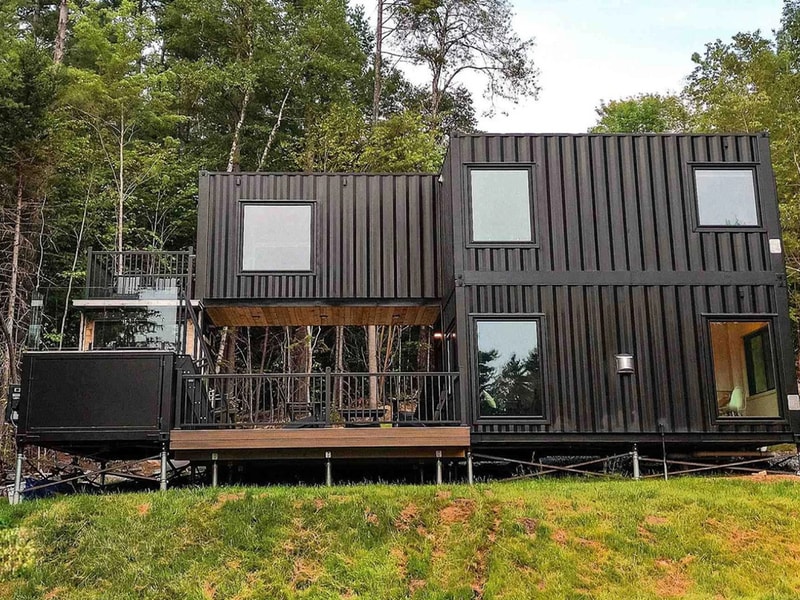
Backcountry Containers’ Vermont Villa presents a residential structure built from five modified shipping containers arranged across two levels. The layout combines three 20-foot units with a larger 40-foot container, forming an expanded interior with multiple living zones. The design includes a main living room, kitchen, dining area, and two bedrooms, alongside a secondary lounge space. Large window openings and glazing are integrated into the steel structure, introducing natural light across the interior.
The exterior includes a ground-level terrace connected to a custom SaunaPlunge unit constructed from an additional container. The unit contains both a sauna and a plunge pool positioned adjacent to the main structure. A rooftop deck extends from the upper level, providing elevated outdoor space overlooking the surrounding landscape. A spiral staircase links the interior levels, with circulation organized vertically through the stacked container configuration.
Image Credit: Backcountry Containers
What's Driving This Trend
- Modular Steel Living
- The repurposing of shipping containers into stacked, multi-zone homes reveals opportunities for scalable, transportable housing systems that reduce on-site labor and enable rapid deployment.
- Container Wellness Integration
- Integration of compact wellness modules like sauna-plunge units into residential containers points to novel amenity-driven living typologies that blend health-focused features with compact footprints.
- Rooftop Micro-urbanism
- Rooftop decks and vertical circulation in container builds highlight potential for layered outdoor living strategies that optimize limited land through vertical public and private realms.
Who This Affects Most
- Residential Construction
- The container villa model signals a shift toward standardized, off-site fabricated components that could disrupt traditional framing and foundations practices in housing delivery.
- Hospitality and Retreats
- Compact, modular accommodations with integrated wellness features suggest new hospitality formats that prioritize unique experiential stays over conventional hotel footprints.
- Prefab Manufacturing
- High customization of container conversions indicates demand for configurable prefabricated modules and supply chains that can produce ready-to-assemble living and amenity units at scale.