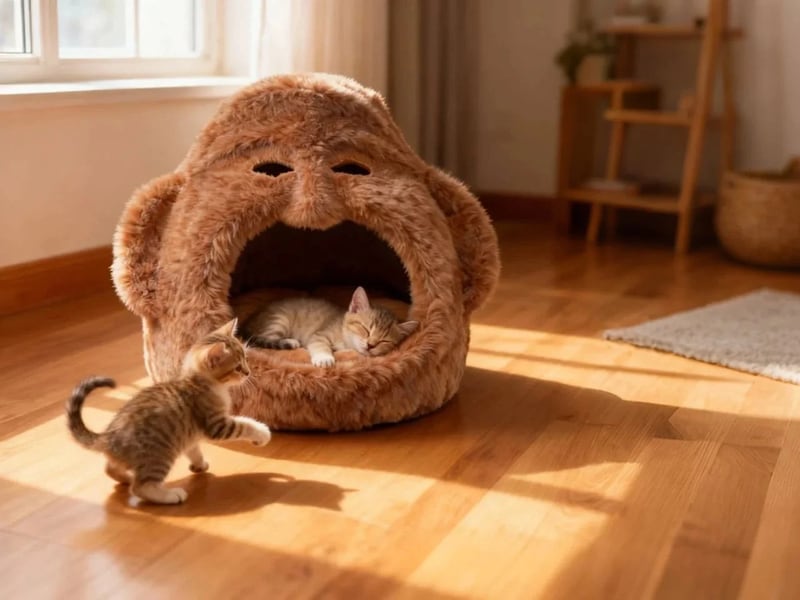
The monkey-shaped cat house presents a pet shelter designed as an oversized sculptural form, featuring a large monkey head with an open-mouth entrance. The structure uses a plush exterior with soft padding, forming a rounded enclosure that functions as a resting space for cats. The interior is recessed within the head, creating a cave-like volume sized for small animals. The exaggerated facial features define the outer shell, while the entry opening is integrated directly into the mouth.
The object is constructed with a cushioned surface and textile covering that softens the overall form. The interior lining provides an enclosed space with reduced light and external visibility. The piece is designed as a standalone object placed within living spaces, with proportions that make it visually prominent. The form combines character-based design with a fully enclosed structure that accommodates resting and hiding behavior.
Image Credit: Puxilang
Why This Trend Is Growing
- Sculptural Pet Furniture
- Aesthetic-forward pet furnishings blur the line between functional animal shelters and gallery-worthy objects, enabling volume-driven forms to redefine living-room focal points.
- Character-based Home Objects
- Designs that anthropomorphize household items introduce personality-led pieces that change consumer perception of utilitarian products into collectible decor.
- Enclosed Sensory Retreats
- Small, cave-like interiors with reduced light and soft surfaces prioritize animal sensory comfort and suggest new standards for privacy and stress reduction in domestic environments.
Industries Being Reshaped
- Pet Products
- The merging of plush materials and sculptural forms points toward premium, design-centric pet lines that command lifestyle-brand positioning and higher margins.
- Home Decor
- Oversized, character-driven furniture pieces alter spatial narratives in interiors and create opportunities for limited-edition, statement-making collections.
- Textiles and Soft Goods
- Innovations in padded coverings and durable upholstery suggest new material systems optimized for both tactile comfort and sculptural stability.